
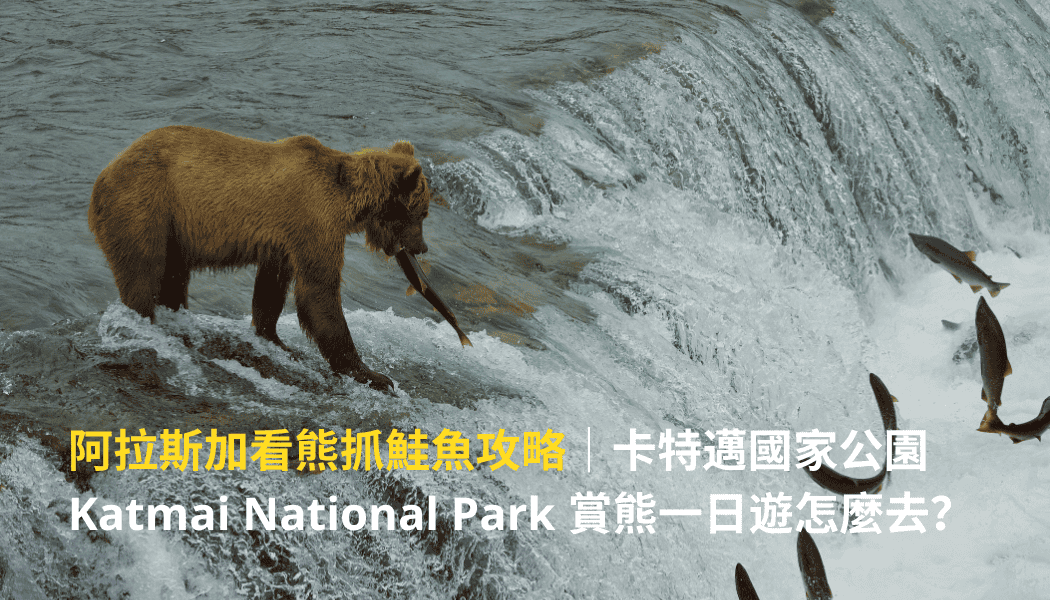
When Alaska is mentioned, most foreigners often think of...auroraHowever, many who have visited Alaska consider it the most beautiful and worthwhile place to visit in the entire United States. This is because, in addition to the aurora borealis, it boasts abundant natural scenery and wildlife, and in the summer, visitors can enjoy unique river fishing experiences.rowing a light boatThe most unforgettable experience was undoubtedly witnessing a bear catching a salmon while standing on the boardwalk of the national park.
This scene plays out every summer in Katmai National Park, Alaska, making it a popular destination for nature lovers. It's one of the world's most famous sites for observing wild brown bears; according to the National Park Service, the park is home to over 2,200 brown bears, one of the highest densities in the world. Especially during salmon run season, large numbers of brown bears gather at fixed locations to hunt, making the success rate of "watching bears catch salmon" almost 100% (TP3T).
Reaching Katmai is no easy feat. There are no roads leading to the area; one must travel by plane followed by a seaplane or boat. Online experience sharing is limited and often unreliable. Flights and accommodations frequently need to be booked months, even a year, in advance, and are expensive. For most foreign travelers, the planning alone is enough to deter them. This article will guide you through making it easier to see the bears in Katmai, the best season, and important considerations. It will also help you assess whether a day trip is the right option for you.
Highlight the finishing touches:
Katmai National Park | Real footage of a bear catching a salmon
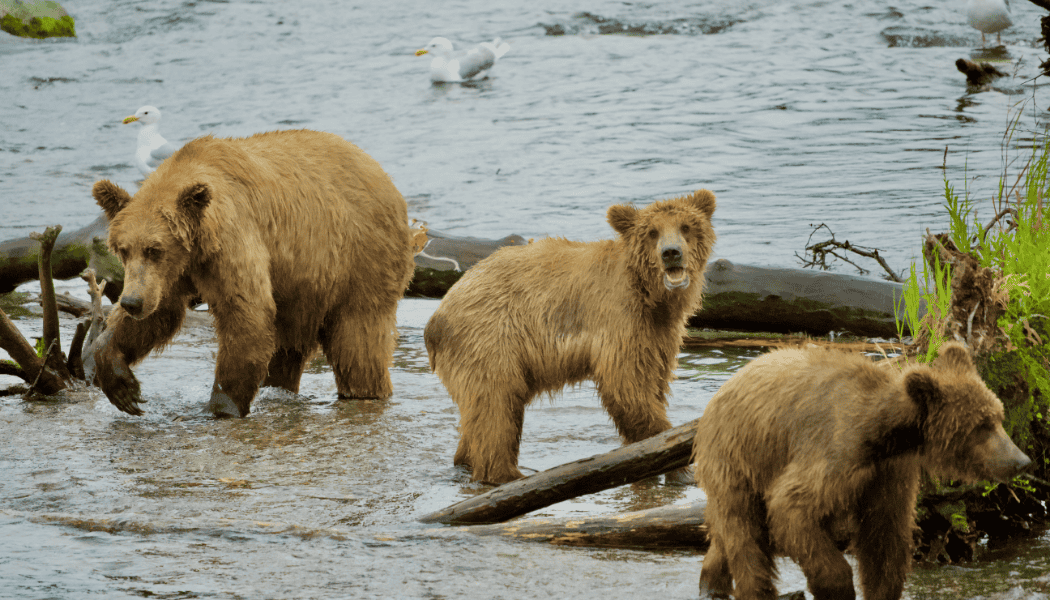
Katmai National Park and Preserve is a vast area spanning over 4 million acres, encompassing volcanic landscapes, glacial lakes, tundra, and primary forests. Its minimal human disturbance allows salmon runs, brown bear foraging, and other wildlife activities to function naturally, creating a highly stable and predictable ecological cycle. Therefore, every summer, when tens of thousands of salmon swim upstream to leap over waterfalls to spawn, brown bears are already waiting in the water or at the top of the falls, ready to catch them the moment they leap out of the water! The boardwalk and viewing platform near Brooks Falls offer the best vantage point to witness this interaction of nature.
Besides the numerous bears in the waterfall area, the park also protects one of the world's largest and most important brown bear habitats. These bears are not fed or domesticated by humans, so their behavior is closer to its natural state. This includes how they choose fishing spots, establish territories, and even the power relationships between different individuals, all of which can be clearly observed. This is why Katmai is often regarded as an important location for studying wildlife behavior, and sometimes you can witness the amazing scene of "humans and bears in the same frame" without disturbing each other.
To maintain ecological balance while allowing tourism, the U.S. National Park Service limits the number of people allowed into specific areas each day and regulates visitor routes and durations. These measures aim to minimize human disturbance while ensuring that bears do not alter their natural behavior due to human presence.
Therefore, the bear-watching experience in Katmai is more like a human quietly entering the bear's kingdom and experiencing nature under safe conditions, rather than being arranged or designed for staged photos.
Is a self-guided trip to Caterpillar difficult? Transportation and park entry restrictions are the biggest hurdles.
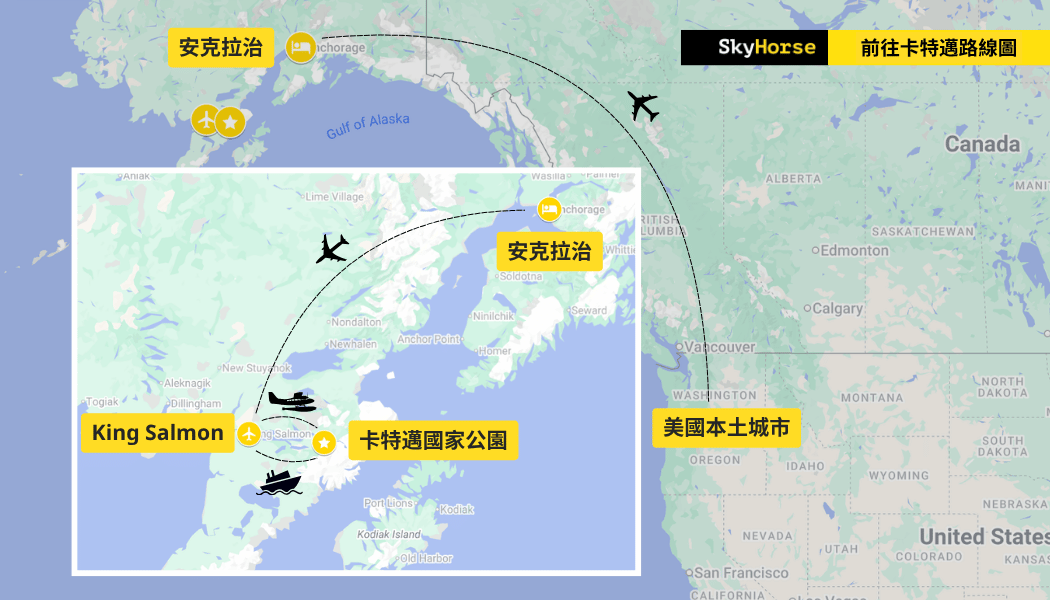
Katmai is so special, yet so difficult to reach. Located in a remote part of Alaska, the national park itself has no road connection to the outside world, nor is it accessible by train or bus. Visitors can only reach it by plane or boat, with small sightseeing planes being the most common mode of transport.
Independent travelers typically depart from Anchorage, taking a small inland plane to King Salmon, and then transferring to a seaplane to reach an airport near the park. The one-way flight takes approximately 1.5 to 2 hours, with round-trip tickets costing around US$$800-1,000. However, due to limited seating on each aircraft (a seaplane can carry approximately 4 to 10 passengers), unpredictable weather conditions, infrequent flights, and high prices, many travelers choose to stay overnight in the national park to accommodate the commute and the desire to see bears. However, local cabins require booking more than a year in advance, and campsites often require a lottery system, demonstrating the extremely high barrier to entry for independent travel to Katmai.
Therefore, many people who want to visit Katmai ultimately choose to join a local package tour. There's no need to be restricted by flight seats or rush to book accommodations, and refunds are usually available if the trip is cancelled due to bad weather. Local travel agencies help coordinate transportation, timing, and park admission arrangements, making it a more stable and lower-risk option for travelers with limited time or those visiting for the first time.
| independent travel | Day trip itinerary | |
| modes of transportation | Transfer | Anchorage → King Salmon (70-80 minutes) Approx. US$500 King Salmon → Katmai Seaplane: 20 minutes, approximately US$1 Tb 4 Tb 450 round trip; Water Taxi (direct to Brooks Camp): 45 minutes, approximately US$1 Tb 4 Tb 450 round trip. Book a small plane from Anchorage to Katmai, the round trip costs approximately US$1,500 per person. You need to make your own way from the airport to the national park; no entrance fee is required. | Depart from Anchorage in the morning, with a tour guide providing transportation throughout the trip, and fly directly back to Anchorage in the evening. Price including tax: US$1,840 per person. |
| Advantages | Experience the challenge and flexibility of independent travel; a slightly more affordable option is to stay inside a national park (if accommodation is available). | Led by a local guide, group activities are safe, convenient, and relaxing. No need for independent research; communication is in Chinese. No worries about difficulties; no need to prepare equipment for day trips; and no worries about booking flights or accommodations. |
| Disadvantages | You will need to arrange your own transportation for each part of the trip. Delays may significantly impact subsequent parts of the trip, and you will need to communicate with locals on your own. | All-inclusive packages are more expensive and require group activities; overnight stays are not allowed; tours are only available on weekends. |
What should you be aware of when watching bears catch salmon in Katmai?
Best time to visit: Open from June to September
Bear watching in Katmai is not an annual event, and if your goal is to see the classic scene of a bear catching a salmon, the timing is crucial.
Generally speaking, mid-July to early August is the ideal time. This is the peak migration period for sockeye salmon, when large numbers of salmon attempt to leap over Brooks Falls. Brown bears will gather around the falls to hunt, making it the easiest time to see them standing in the water or above the falls "catching" the fish.
Even after entering September, the bear population remains significant, but the salmon migration phase has changed, with most fish having completed spawning or experiencing a decline in strength. At this time, bears will shift their foraging behavior to riverbanks, shallow waters, or other areas. Although there is still a chance to see fishing, the scenes of them concentrating on hunting at waterfalls are relatively fewer.
Safety and Maintenance Guidelines
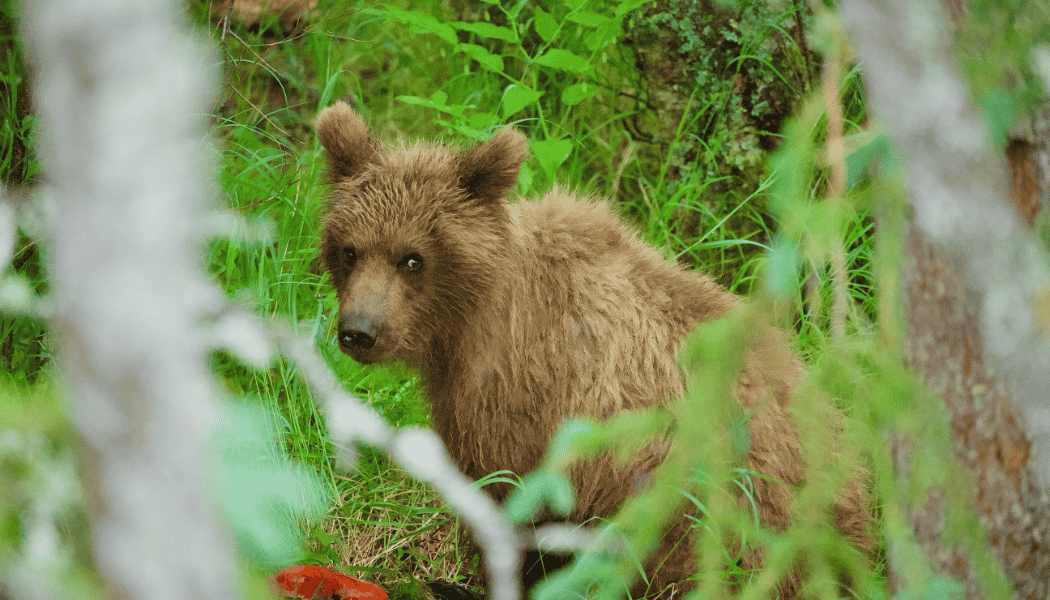
Every visitor must attend a "safety talk" because in this national park, people are much closer to wildlife than at other tourist attractions—not just at waterfalls, but also on trails, in the woods, or along riverbanks, where bears may be encountered.
Therefore, the park particularly emphasizes several basic principles:
- Travelers are advised to travel in groups and avoid going out alone. They should also proactively let their surroundings know they are present, for example, by engaging in conversation or making noise, to reduce the risk of a sudden close encounter with a bear. This does not mean using loud noise to scare the bears away, but rather avoiding startling them.
- When you observe a bear, the most important thing is to keep your distance and remain calm. Do not approach it or try to change its direction of travel; if you need to leave the area, back away slowly, and never turn and run.
- Avoid getting close to bear foraging areas, such as salmon streams or riverbanks, as these areas are not only the core of bear activity but also places where human and bear movement paths can easily overlap.
- The park has strict regulations regarding food management. All food and items with strong odors must be stored in bear-proof containers (food caches), and eating is only permitted in designated picnic areas. These regulations are not only for visitor safety but also to prevent bears from changing their behavior due to becoming accustomed to human food.
The official safety guidelines for Katmai National Park state:"When you visit Katmai, you have a responsibility to protect the experience, the safety of everyone, and the bear population of Katmai."When bears open their habitat to human visitors, all visitors should work together to maintain the balance between their home and nature.
Comfortable and warm to wear
Even in summer, the perceived temperature in Katmai is different from what most people imagine "summer" to be. Due to Alaska's high latitude and the influence of its coastal and mountainous climate, temperatures are generally cool, with significant temperature differences between day and night.
During the day, there may be strong sunlight and high UV intensity, so it is recommended to prepare basic sun protection products. Also, the weather is characterized by rapid changes; sudden rain or strong winds are not uncommon, so bringing windproof and waterproof gear is very practical.
The walk from the visitor center to the Brooks Falls viewpoint is approximately 2 kilometers, and the route is mostly a flat trail. For most visitors, this distance can be easily completed by wearing comfortable sneakers or lightweight hiking boots.

Experience the full range of Alaska's diverse landscapes in one day
A typical day trip begins early on a weekend morning, around 7 a.m., with a small plane departing from Anchorage for Katmai. During the flight, you can enjoy views of volcanic landscapes, lakes, valleys, and primeval forests. If you're lucky, you might even spot moose, whales, or wolves in the distance. This flight itself is part of the journey.
Upon arrival, park staff will provide a brief safety briefing, followed by a walk to the Brooks and Falls bear viewing area. The entire national park is home to approximately 2,200 brown bears. The stay typically lasts several hours, during which visitors are free to observe bear activity from the viewing platforms and explore the surrounding environment.
Besides brown bears, there's also a chance to see other wildlife, such as seabirds, otters, or the occasional elk. The overall experience is more like entering a complete natural ecosystem than a single attraction. Around 3 or 4 pm, we'll head to the airport to return to Anchorage, depending on the weather and flight schedule. The tour usually concludes before 5 pm.
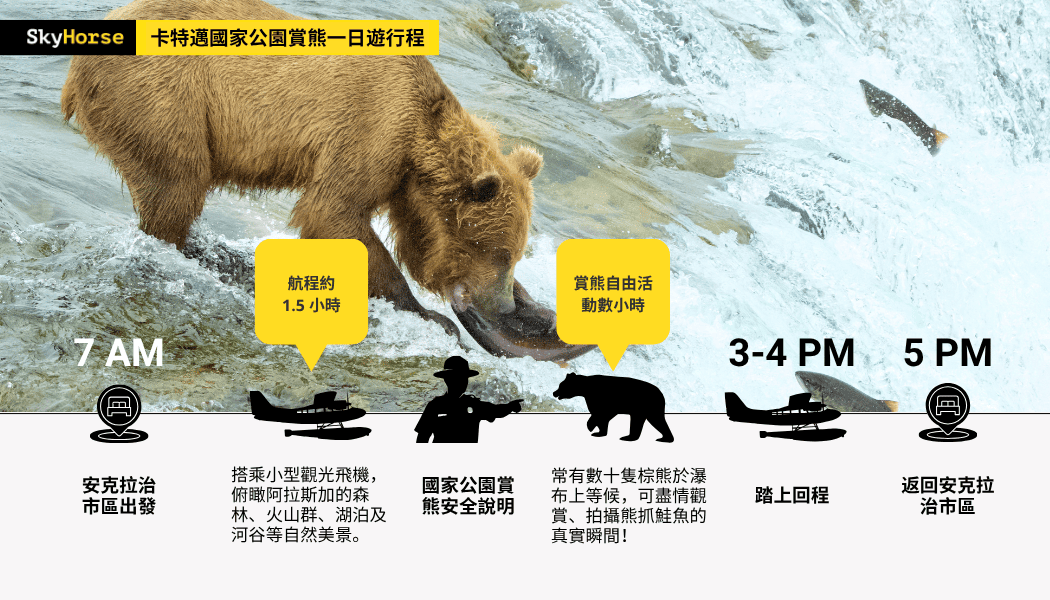
Don't miss the unique bear-watching experience at Katmai National Park!
FAQ
Is it safe to watch bears at Catermay?
Following safety guidelines and adhering to official regulations, the area is perfectly safe. The viewing area features walkways and platforms, and limits the number of people and distance to minimize the risk of human-bear contact.
Is it guaranteed that we'll see a bear?
The chances of seeing bears are extremely high between July and August, but since they are wild animals, it cannot be guaranteed 100%.
Do you need a lot of physical strength to go bear watching in Alaska?
No. The main activities involve walking on gentle trails and observing fixed points, making it relatively easy for most travelers.
Can I travel to Katmai on my own?
Yes, but you will need to arrange your own flights and accommodations, and flights are subject to significant risks due to weather conditions, making it quite difficult.
Do you have to go to Brooks Falls to see bears catching salmon?
Brooks Falls is the most stable and famous location, and it's the area that's included in most itineraries.
Is it possible to see the aurora borealis in winter and also go to Katmai to see bears?
No. Summer is the best time to visit; most national park facilities are closed in winter, and bears hibernate.
Why are day trips so expensive?
Considering the cost of airfare (a round trip without a charter costs over 1,000 per person for 4 tons) and the remote location, this is a high-priced experience within a reasonable range.
Is this suitable for people bringing elderly relatives or those visiting the US for the first time?
If your physical condition allows and you can accept flying and challenging outdoor natural environments, it will definitely be a very special and unforgettable experience.
A natural textbook on peaceful coexistence between humans and bears
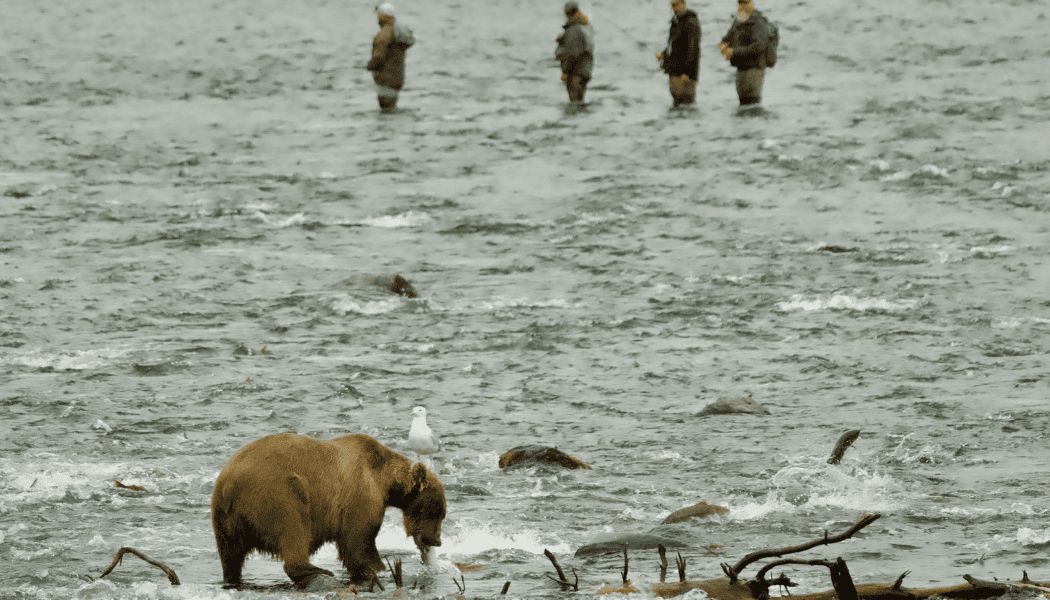
If you love wildlife, enjoy nature, and crave unique travel experiences, then watching bears catch salmon in Alaska is definitely a must-do on your travel bucket list. While photos and videos from others can be breathtaking, actually stepping into a bear-inhabited land will be an even more surreal experience.
Katmai National Park offers far more than just beautiful scenery. Experiencing the workings of nature is like stepping into a living textbook of nature, making it an unforgettable experience that every visitor to Alaska must have at least once in their lifetime.