
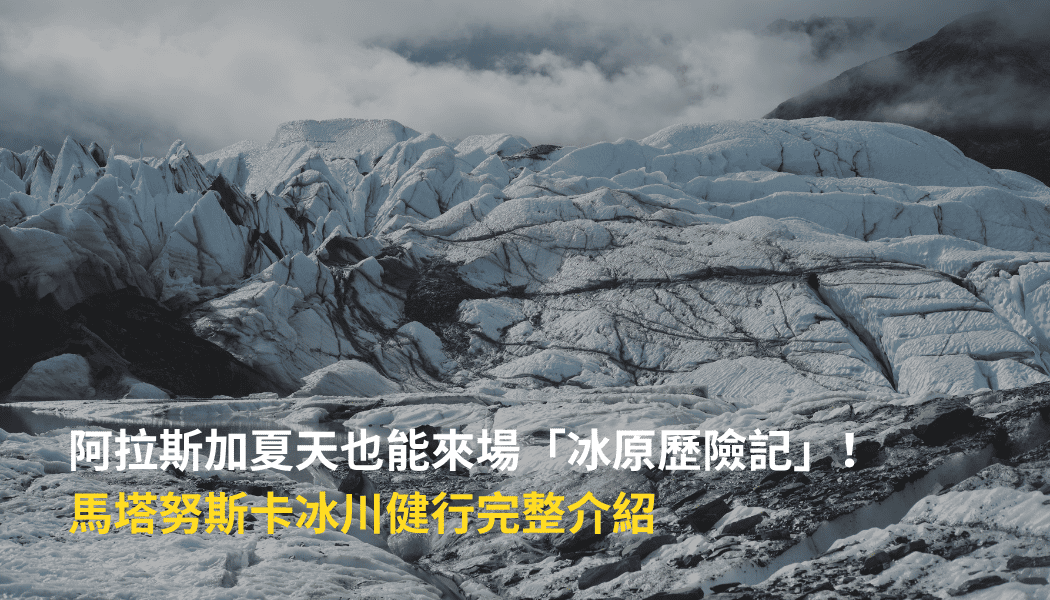
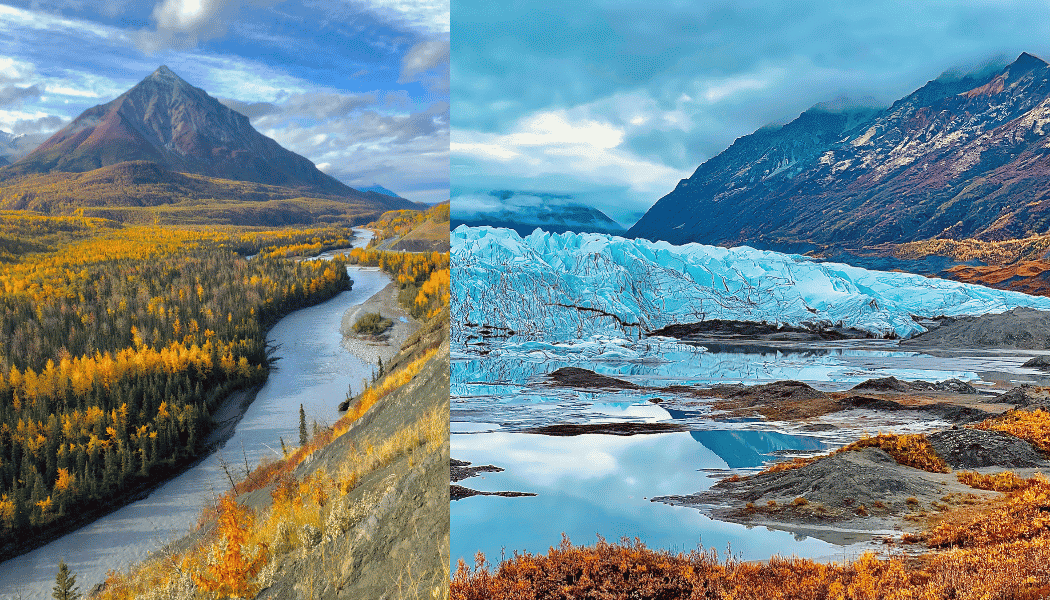
Summer is hereAlaskaNot only can you escape the heat, but you can also see completely different beautiful scenery on the same day – one moment you are passing through the green valleys, winding rivers and mountains on both sides of the road, and the next scene is a blue and white glacial world!
That's right, Alaskan glaciers don't melt in the summer, and you can even walk on them. This contrast with the environment is what makes glacier hiking so appealing.
The Matanuska Glacier is the most accessible glacier in Alaska. More importantly, visitors don't just admire the scenery from afar, from a viewing platform or by boat; they can step onto the ice, get close to the blue ice, and become part of the landscape, experiencing firsthand the stunning geological formations sculpted by history and nature. For travelers to Alaska, this is a magical experience that's hard to replicate on other tours.
Highlight the finishing touches:
Get to know the Matanuska Glacier
We can think of the Matanuska Glacier as a "very, very slow-flowing glacier" that stretches from the Chugach Mountains down into the valleys, eventually almost reaching the Glenn Highway, forming a massive valley glacier that has sculpted the surrounding landscape over a long period. Located about 2 to 2.5 hours northeast of Anchorage, it's easily accessible without needing to take a helicopter, boat, or venture into remote mountains, making it one of Alaska's most accessible glaciers for travelers.
Starting from Anchorage, the journey first takes you through summer valleys, rivers, and open highways before gradually approaching this vast expanse of blue and white ice. The Matanoska Glacier is also an excellent entry point for understanding Alaska's natural environment. It allows travelers to see how glaciers extend from high mountains to lowlands, carrying debris, silt, and meltwater, and continuously reshaping the valleys over countless years.
What makes hiking on the Matanuska Glacier special, and how does it differ from other glacier experiences?
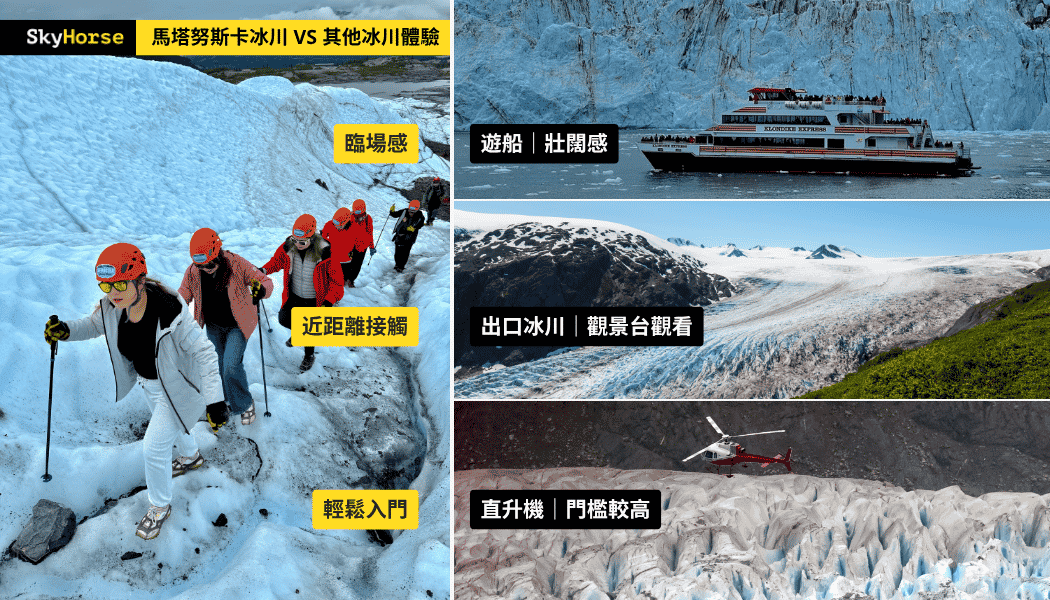
Alaska boasts numerous renowned glaciers, each offering a unique experience. Some are best viewed by boat, others from observation decks, while still others require a helicopter ride or a higher budget to reach.
The advantage of the Matanuska Glacier lies in its combination of accessibility, hands-on experience, and tourist-friendly features.
1. Compared to glacier cruises: Grandeur vs. Immersive Experience
Many travelers to Alaska include Kenai Fjords National Park, Prince William Sound, or other glacier cruises in their itineraries. The allure of glacier cruises lies in their grandeur: you can see massive tidal glaciers and fjord topography from the sea, and have the chance to witness glacier collapses, whales, sea lions, or seabirds. What you will see is the sheer scale and power of the glaciers.
Hiking on the Matanuska Glacier transforms the glacier from a distant landscape into a space you can actually walk into. When you step onto the ice with crampons, hear the crunching sound beneath your feet, and see the various blue hues and meltwater marks between the ice layers, the glacier is no longer just a backdrop; there are many more details and feelings to experience within it.
2. Compared to the Exit Glacier: Witnessing Earth's Changes vs. Close Encounters
Exit Glacier is one of Alaska's most iconic glacier attractions, located near Kenai Fjord National Park. It's relatively easy to access from Seward, and there are hiking trails leading to the glacier viewing area. For those wanting to see signs of glacial retreat and understand climate change and glacial landforms, Exit Glacier is a highly educational destination.
Most visitors to the Exit Glacier experience mainly involve observing and gazing at the scenery from afar along the trails. You can witness firsthand how the glacier has shaped the landscape and history, but if you're looking for a closer experience, putting on crampons and walking on the Matanoska Glacier will provide a more immersive experience.
3. Compared to helicopter glacier experiences: High barrier to entry vs. easy to get started
Alaska also offers numerous helicopter glacier landings and glacier hikes, typically with stunning visuals and the advantage of venturing into areas inaccessible by regular vehicles. For travelers with a sufficient budget seeking the ultimate experience, helicopter glacier tours are a worthwhile option.
However, it is usually expensive and highly dependent on the weather, so the itinerary needs to be very flexible.
The advantage of the Matanuska Glacier is that it is relatively easy to plan. A day trip from Anchorage is all it takes.Passengers do not need to arrange helicopter rides or have professional mountaineering or ice climbing experience.The itinerary is not too difficult to arrange, and you can get to see real glacial terrain.
While hiking on the Matanuska Glacier requires a professional guide and the use of equipment such as crampons, helmets, and trekking poles, no prior experience is necessary, and there are no strict physical requirements. This makes it an ideal option for first-time visitors to Alaska who want a bit of outdoor adventure but don't want to be too physically demanding.
- For a different glacier experience, refer to Alaska Summer 5-Day Glacier, Fjord, and Wildlife Tour
From the highway into a glacial world: A unique hiking experience on the Matanuska Glacier
The Matanuska Glacier hike begins the moment you leave Anchorage and hit the Grand Highway! On the way to the glacier, city views gradually give way to valleys, rivers, forests, and expansive highways. Alaska summers are long and sunny, the natural environment is vibrant, and the diverse landscapes along the way offer the chance to spot wildlife. This journey is more than just transportation; it's a beautiful adventure that slowly takes you from the city into the valleys, and closer to the glacial world.
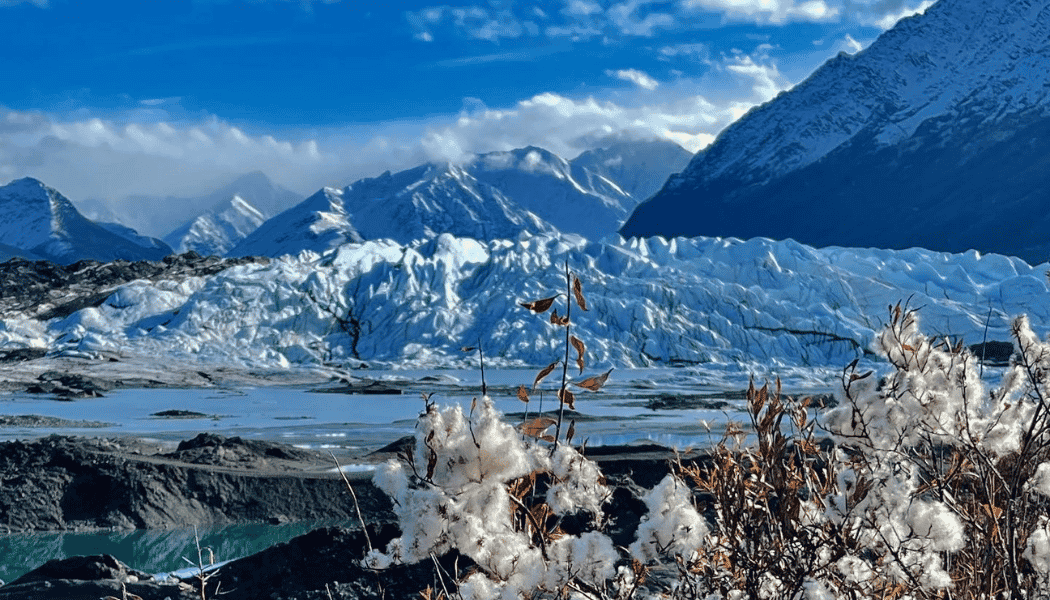
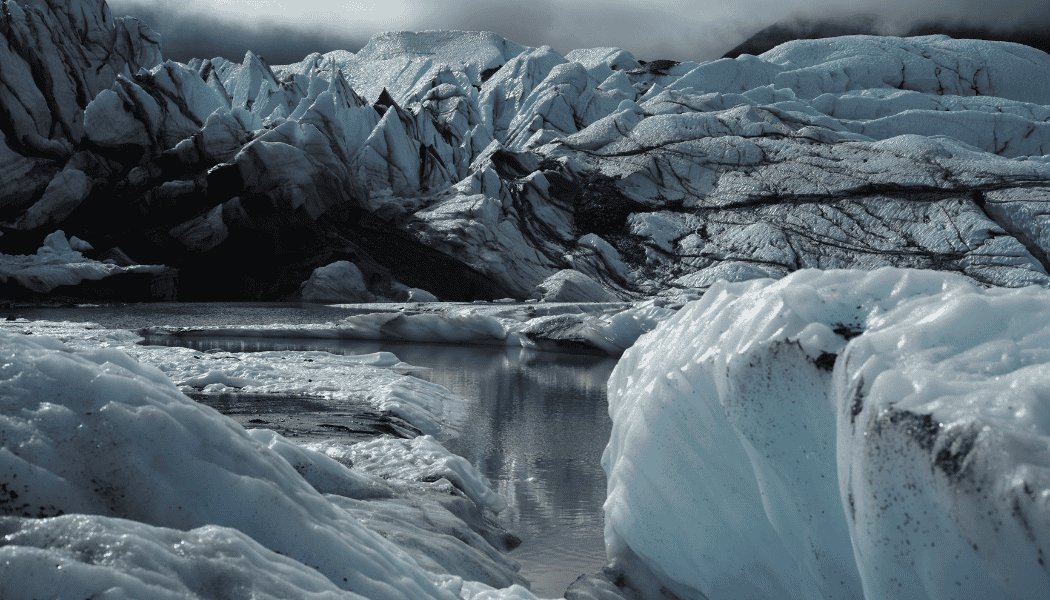
Upon arrival at the Matanuska Glacier, you will be led by a professional guide onto the ice. From a distance, the glacier appears as a vast expanse of white, gray, and blue ice, but once you step onto it, you'll discover that it's not smooth snow, but rather a magical terrain full of details and lines.
On the ice, you might see clear meltwater, glacial mud stained with gravel, varying shades of blue ice, ice layers that alternate between transparent and misty white, as well as cracks and undulating surfaces. With every step, you can feel that this is a slowly moving, constantly changing glacier. Because the glacier's topography changes with the seasons, weather, and melting conditions, hiking on the Matanoska Glacier isn't like a fixed tourist spot; the experience of stepping onto the glacier is unique to that moment.
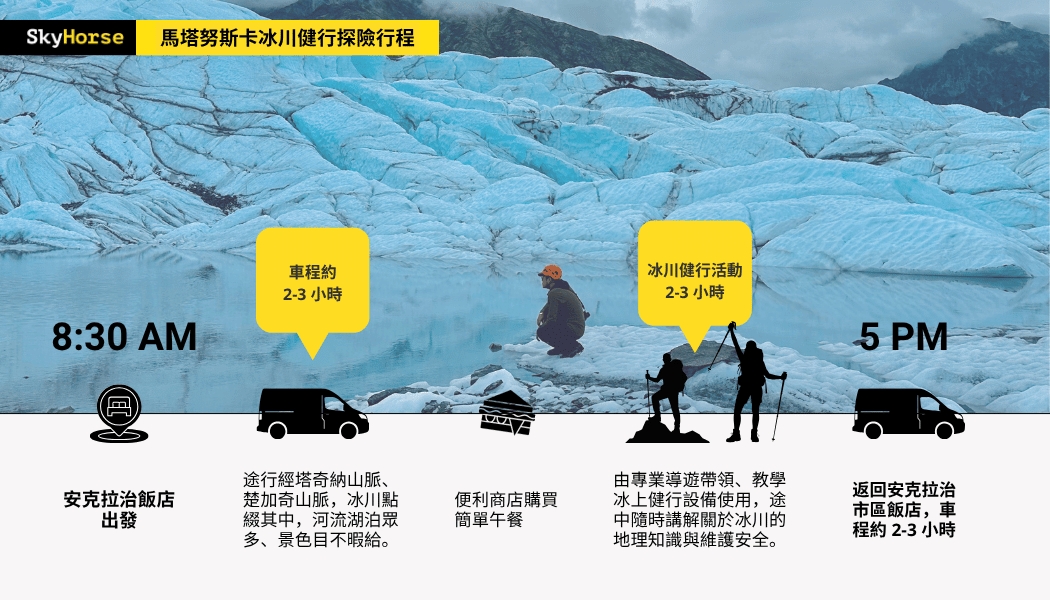
One-day hiking adventure on the Matanuska Glacier
Depart from Anchorage Hotel at 8:30 a.m. for Matanuska Glacier. The drive takes about 2.5 hours, passing through the Tachina and Chugach Mountains, dotted with glaciers, numerous rivers and lakes, and breathtaking scenery.
After purchasing lunch at noon, we will arrive at the glacier. A professional guide will lead a 2-3 hour glacier hike, providing explanations of glacier geography and safety precautions along the way. The tour concludes around 5:00 PM, and we will return to Anchorage city.
Who is the Matanuska Glacier hike suitable for?
- First visit to Alaska, looking to arrange representative experiences
- People who enjoy natural landscapes and unique experiences, but do not pursue challenging outdoor activities.
- Travelers who value memorable travel experiences and dislike rushing through the sights
This trip still requires basic physical fitness and balance. The ice and gravel terrain is not as smooth as city sidewalks. If you have knee, ankle, mobility, or balance issues, it is recommended that you check the difficulty of the trip and the travel agency's regulations beforehand before deciding whether to participate.
What do you need to prepare for hiking on the Matanuska Glacier?
- On-site guides will provide crampons, trekking poles, and helmets free of charge.
- Travelers are advised to bring their own non-slip hiking shoes, jackets, gloves, sun protection products, and sunglasses.
Even in summer, there can be wind, humidity, glare, and temperature fluctuations on the glacier. Layering is recommended, with a windproof or waterproof jacket and comfortable, easy-to-move-in inner layers. Footwear should ideally be non-slip, waterproof, or at least suitable for outdoor walking; avoid thin, slippery, or water-permeable shoes.
In addition, sunglasses and sunscreen are also important. The reflection from ice can be stronger than you might expect, and even if the weather isn't hot, you can still get sunburned after prolonged outdoor activities. Gloves, hats, and spare socks are also essential, especially if there is meltwater on the ice, as wet shoes and socks can significantly impact comfort.

Walking on a glacier will be one of the most unforgettable moments of an Alaskan summer.
The Matanuska Glacier hike is worthwhile not only because of its spectacular scenery, but also because it allows travelers to experience Alaska in the most direct and intimate way possible, making it arguably the best way to truly understand Alaska. Starting from Anchorage, you can drive along the valley road close to the glacier and eventually walk on the ice, combining scenic highway views, glacial landscapes, and a sense of accessible adventure.
For first-time visitors to Alaska, this will be a signature "icefield adventure," making "stepping into the glacial world even in summer" an unforgettable memory and experience! Still unsure whether to go? Check out A-Di and Di-Mei taking their parents on a trip to the Matanuska Glacier!
FAQ: Frequently Asked Questions about Hiking the Matanuska Glacier
Q1: Is hiking on the Matanuska Glacier suitable for first-time visitors to Alaska?
Suitable. The Matanuska Glacier is one of the relatively easy glacier hiking experiences to arrange in Alaska. A day trip can be planned from Anchorage, and no professional mountaineering or ice climbing experience is required. However, travelers still need to have basic walking ability and follow a professional guide.
Q2: Can you walk on glaciers in Alaska during the summer?
Yes. Summer in Alaska is a popular season for travelers to plan glacier hikes, road trips, bear watching, salmon fishing, and bay cruises. The Matanoska Glacier in summer offers travelers a unique experience of walking on the glacier amidst green valleys and long days.
Q3: What are the differences between the Matanuska Glacier and the Exit Glacier?
The Exit Glacier is great for appreciating the glacial landscape through trails and viewpoints, and for understanding glacial retreat and climate change; the Matanuska Glacier offers a more authentic glacier hiking experience, where visitors can walk on the ice with crampons under the guidance of a guide and get up close to the blue ice, crevasses and glacier surface topography.
Q4: Do I need a guide for hiking on the Matanuska Glacier?
Yes, it is necessary. Access to the Matanuska Glacier requires a guided tour led by a local guide. The glacier's terrain is constantly changing, and the surface may be slippery, uneven, cracked, or contain meltwater. Following a professional guide and using appropriate equipment will be safer and more rewarding than going on your own.
Q5: Is it very cold to visit the Alaskan glaciers in the summer?
Glaciers are colder than in the city or on regular trails, especially due to wind, moisture, and glare on the ice. It's recommended to dress in layers, bringing a windproof jacket, gloves, a hat, and sunglasses. Even in summer, don't go to the glacier in just a short-sleeved shirt.
Q6: Are there any age restrictions for hiking on the Matanuska Glacier?
Age restrictions vary depending on the tour company and the difficulty of the itinerary. Generally, participants need to be able to walk steadily on uneven ice and gravel terrain; if there are children, elderly people or people with mobility impairments in the group, it is recommended to check the regulations and consult a professional doctor before registering.
Q7: How much time should be allocated for a hike on the Matanuska Glacier?
Glacier hiking itself typically takes about 2–3 hours. If starting from Anchorage, including round-trip driving time (about 5 hours), check-in and gear-up time, it will be a full-day trip, and it is not advisable to schedule other high-intensity activities on the same day.