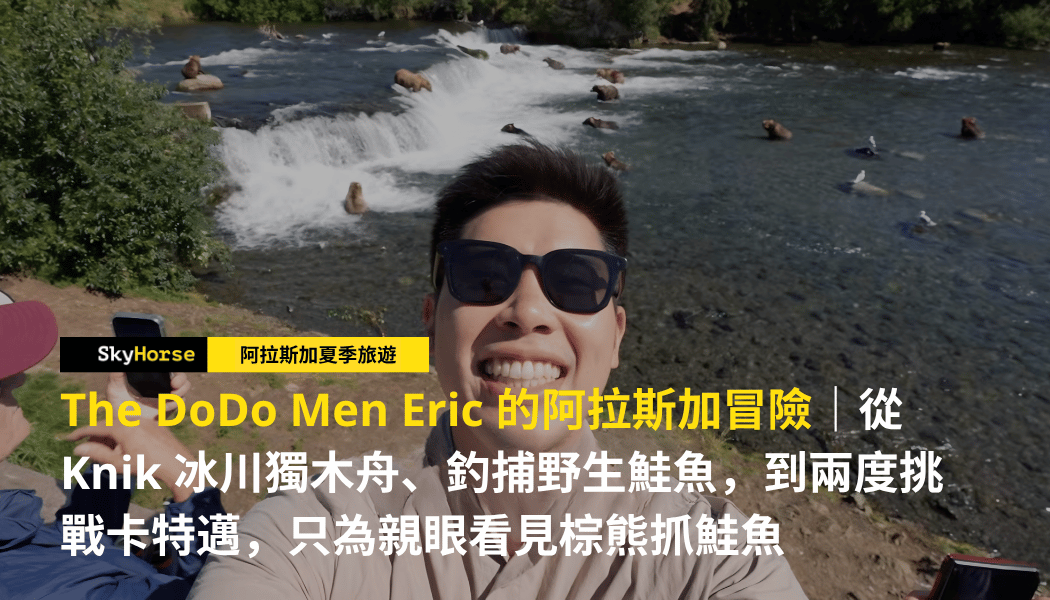
Fly to Alaska again for a scene I didn't see.
Eric's most anticipated moment on this Alaskan trip was standing by Brooks Falls and watching a brown bear dive into the water to catch salmon.
The plan was to transit through Anchorage and fly into Katmai National Park, which has the highest density of brown bears in the world. However, the weather in Alaska changes rapidly, and all bear-watching flights were canceled during the days he was expected to arrive.
A typical sightseeing trip might end here with some disappointment. But Alaska's value extends far beyond a single attraction—nearly 20 hours of sunshine in the summer make glaciers, rivers, and remote towns readily available to enrich the itinerary. Eric turned to these experiences and, in doing so, witnessed the most magnificent natural beauty of Alaska.
Back in Los Angeles, the scene he hadn't witnessed remained etched in his mind. Two weeks later, he checked the weather forecast, booked a flight, and flew back to Alaska, just to see what he hadn't been able to see.
First Impressions of Alaska: A City Coexisting with Wilderness
In July, Anchorage enjoys nearly 20 hours of sunshine a day, and it's almost never dark. As soon as Eric landed, he felt that there was virtually no distance between the city and the wilderness.
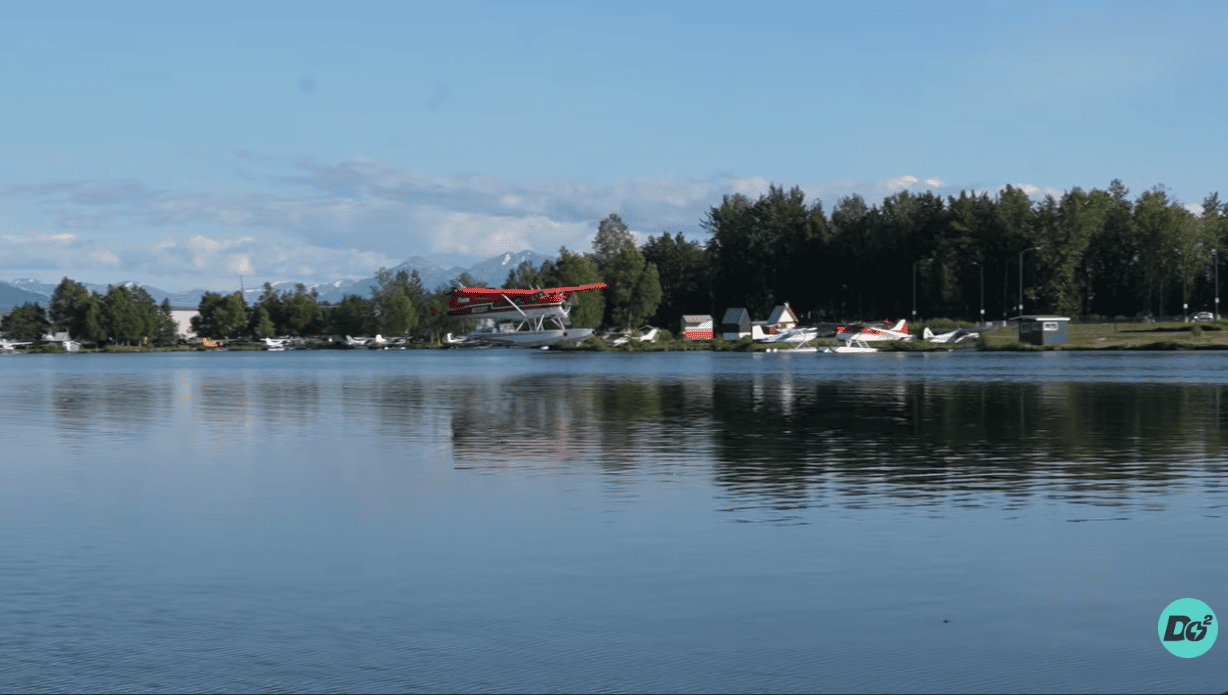
The first stop isLake Hood – the world’s busiest sea airportThe local area has a thick layer of permafrost, making the cost of paving a regular road disproportionately high. As a result, many residents simply buy a seaplane for transportation: in summer, it takes off and lands using floats, and in winter, it's fitted with skis, turning the lake into a snow-covered airport. Want to rent a hangar here? The application process can take seven or eight years.
Next is the Earthquake Park viewpoint. In 1964, a magnitude 9.2 earthquake struck here, lasting approximately 5 minutes. It was the third largest earthquake on record in the world, instantly turning the once gentle slope into a sheer cliff. From here, you can see Cook Inlet, where half of the water is freshwater from glacial meltwater and the other half is saltwater from the Pacific Ocean, creating a striking contrast.
Although Anchorage is the largest city in Alaska, just outside the city limits lies a world of glaciers, wilderness, and wildlife. This unique contrast can only be experienced in Alaska.
Driving into places where there are no roads: Knik glacier off-roading and glacial lake canoeing
Due to the weather, the first bear-watching trip was completely cancelled, and Eric switched to...Knik GlacierThe
There are no regular roads leading directly to Knik Glacier; you have to transfer to a modified off-road jeep with excellent shock absorption to navigate through deep water and muddy sections, even "surfing" in the river. This is the biggest difference between Knik Glacier and many other popular glaciers—like Matanuska or Exit Glacier, which can be reached by car or on foot. Knik, however, has far fewer tourists due to the lack of proper roads, preserving its more pristine and less man-made appearance.
Upon arriving at the glacial lagoon, we transferred to canoes and quietly paddled into the dreamlike blue crevasses of the glacier. The surroundings were quiet, save for the soft, crackling sounds of melting ice—the very breath of nature itself.
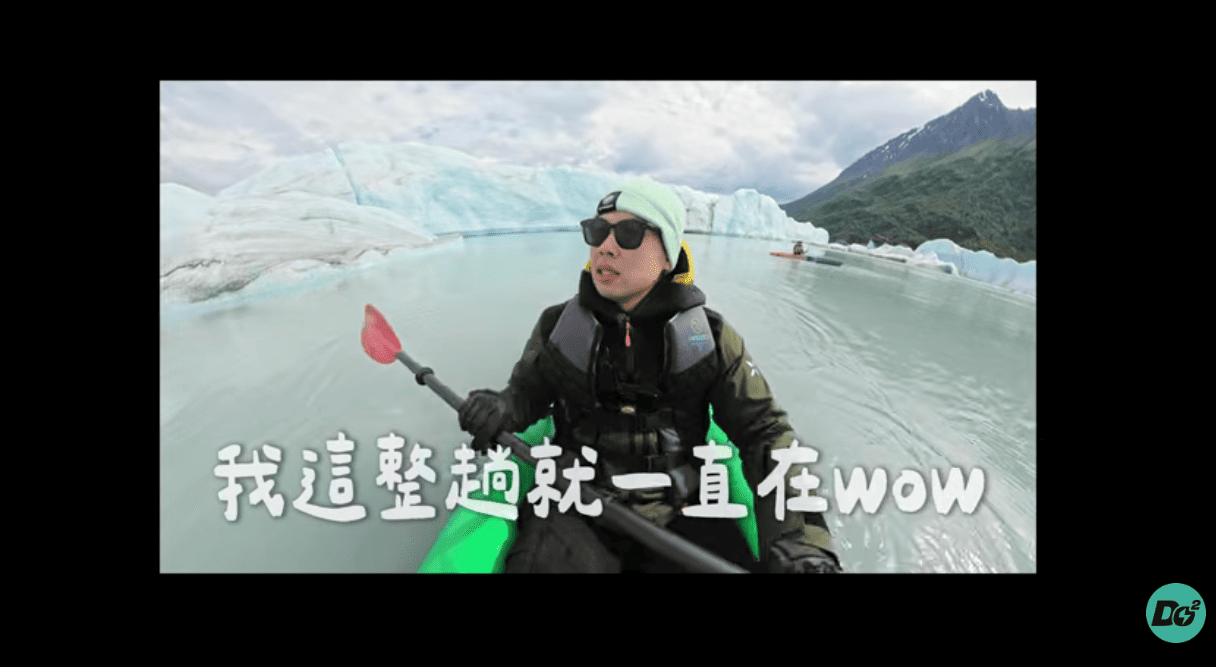
Whether you can get close to the ice wall and which crevice you can squeeze into depends on the ice conditions that day and the guide's judgment. You can't always replicate the same scene. But that's precisely why it's worth making a special trip: it's a glacier that's still "alive" and constantly changing, not a fixed tourist attraction. Every time you get close, you see a unique moment.
Still no fish after 300 casts: Hardcore "no-bait" fishing in Alaska
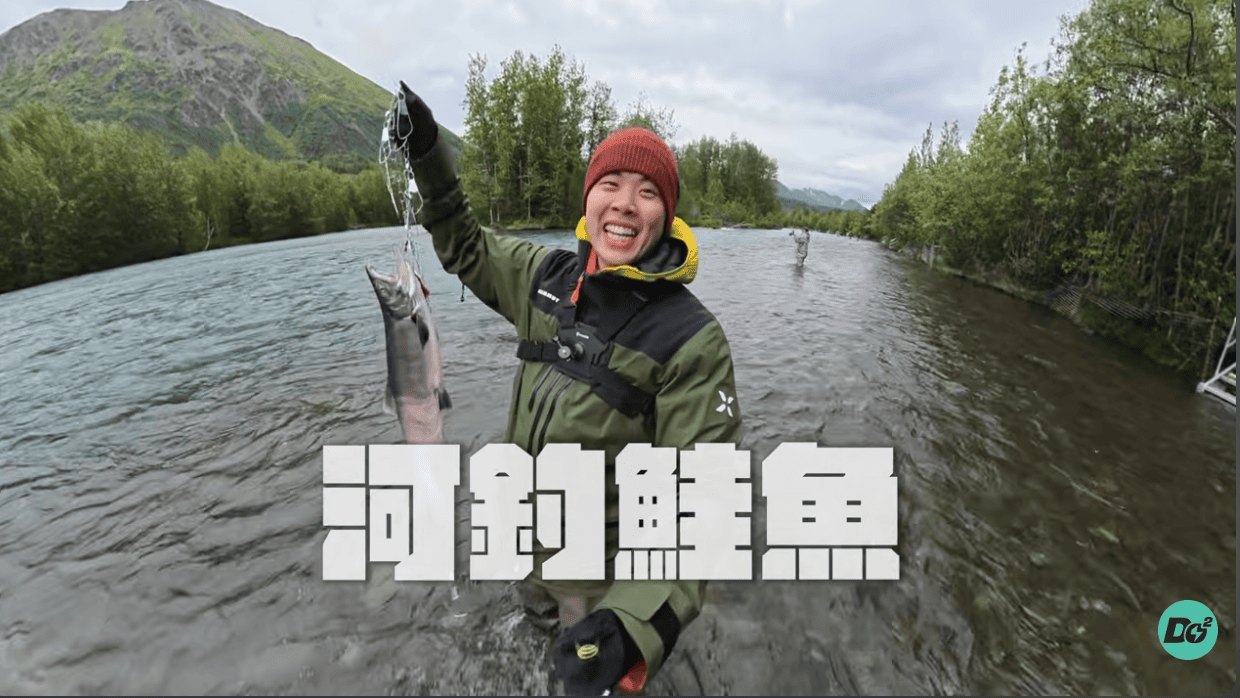
While waiting for the weather to improve, Eric first had a miso-seasoned Asian fusion salmon meal at Glacier Blue House in Anchorage. The next day, he drove two hours to the Russian River to the south to experience the local "Sport Fishing".
This type of fishing can only be seen on a large scale in salmon migration countries like Alaska. Every summer, tens of thousands of wild salmon swim upstream from the Pacific Ocean, crowding the entire river channel. You can even see schools of fish churning on the surface of the river, a sight that cannot be experienced by artificial breeding or ordinary river fishing.
Because of the preciousness of wild salmon resources, the rules here are quite strict: no bait can be used, it all depends on skill; anglers must cast small hooks upstream and pull with the current to hook fish swimming against the current, but they can only hook the fish's mouth; hooking other parts of the body is illegal and must be released on the spot; each person can only take a maximum of six fish per day. Behind these rules is actually Alaska's way of maintaining wild salmon resources and ensuring that the fish migration continues year after year.
That day, the salmon run in the Russian River was exceptionally low, with only about 8,000 fish (up to 200,000 a day during peak season), significantly increasing the difficulty. Eric stood in the cool, fast-flowing water for two full hours, casting his line over 300 times until his arms ached, but ultimately caught nothing. Meanwhile, one of his group members was more skilled, reeling in a wild salmon weighing 5 to 7 kilograms.
Wild experiences cannot guarantee the outcome, which is the biggest difference between them and man-made attractions. What can be arranged is the method of entering the site; nature itself will not follow a script. Standing in this river and personally feeling the power of wild salmon migration is an experience unique to Alaska.
Whittier: A polar town where the entire town lives in the same building
There is a small town in Alaska with a population of just over 200. Regardless of who they are or which household they live in,They all have the same address because everyone lives in the same 14-story building, making it known as "the loneliest town."The town is called Whittier.
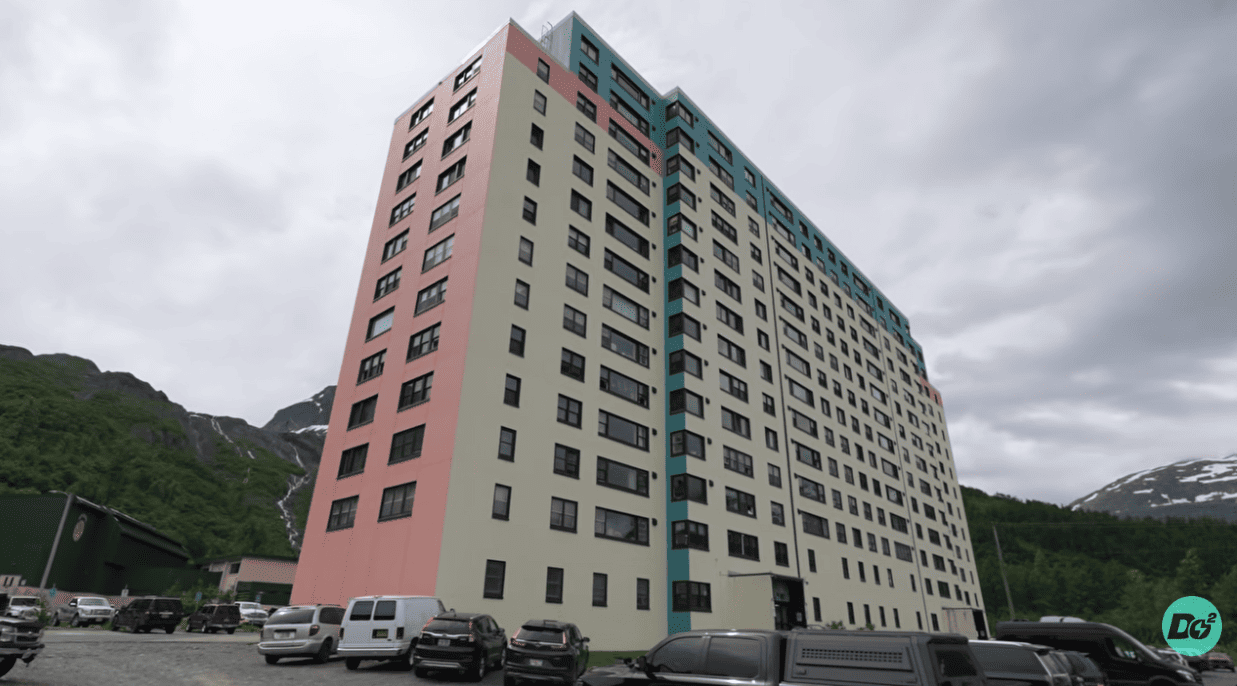
The only overland way to reach Whittier is through the 2.5-mile-long Anton Anderson Memorial Tunnel, the longest in North America and the only one-way tunnel in the world shared by a railroad and a highway. The tunnel is extremely narrow, opening for only 15 minutes per hour for one direction only; if you miss it, you have to wait in line for an hour before you can try again. The tunnel itself already hints at the rather unusual town that lies ahead.
After passing through the tunnel, the building in front of you, called "Begich Towers," is practically the entire town: it has its own post office, convenience store, laundry room, and even a former prison that has now been converted into residences. There's also an underground passageway leading directly to the school, allowing the town's 20-plus children to safely attend school without ever having to leave the building, even during blizzards. The entire building functions like a self-sufficient miniature society—a phenomenon virtually unheard of outside of Alaska.

The top two floors of Begich Towers are home to "Glacier View Condo Suites," run by Taiwanese couple Annie (referred to as Ann by Eric in the video) and her husband Joe Shen. The couple has been based in Whittier for nearly half a century, running not only accommodations but also the local Anchor Inn, which has long been an integral part of the town's daily life.
Annie came to this former military port because of her husband's job opportunity, originally intending only to stay temporarily. Unexpectedly, she encountered a blizzard during her first winter, causing her to look out the window in despair and shout, "What kind of hell is this place?!" Since then, she has told her husband every year, "This is the last year"—and this "last year" has been said for 46 years, and she still hasn't really left.
Today, the couple spends the summers in Whittier welcoming travelers from around the world, and the winters in warm, vibrant Taiwan. This connection has continued into the next generation: their son, Victor Shen, grew up in Whittier, later became involved in local public affairs, and will serve as mayor in 2026. Stepping into Begich Towers, you'll see more than just a unique building where "the entire town lives in the same building"; you'll also be surprised to discover the profound connection this small town in the far corner of Alaska has with Taiwan.
Why did Eric go back after not seeing the bear?
Bear watching is never a typical tourist attraction where booking a time guarantees a visit—it depends on weather, flight conditions, and the wildlife's own movements. After his first flight was canceled, Eric returned to Los Angeles and continued to monitor the Alaskan weather.
What drives his obsession is that this scene is virtually impossible to replicate anywhere else in the world. Katmai National Park boasts one of the highest densities of brown bears globally. These bears aren't captive or lured to designated spots for photo opportunities; rather, they are wild brown bears driven by instincts honed over tens of thousands of years, gathering at waterfalls to await salmon migration. At the same time, in the same stretch of river, one can witness a dozen or more brown bears fishing together – a sight few places in the world can match. It's precisely because weather, flight conditions, and bear movement all need to be perfect simultaneously that this scene is so rare; it's not something money can simply buy!
Two weeks later, the weather finally cleared up, and he rescheduled a two-day flash trip, flying back to Anchorage once again. This time, he first took a small plane to King Salmon, then transferred to a seaplane to land in Katmai National Park.
This wasn't about insisting on "completing the challenge," but rather the rarity of the scene itself, so great that he was willing to spend another trip and plane ticket to obtain it.
Finally arrived at Brooks Falls: The Life Cycle of Brown Bears and Salmon
Before entering the park, all visitors must attend "Bear School" to learn how to safely interact with bears. Only after passing the course and receiving a badge can they be allowed to enter. Walking along the two-kilometer-long forest trail, you'll see grass flattened by bears on both sides, along with fresh bear droppings, and the air is filled with a primal, wild atmosphere.
Upon arriving at the Brooks Falls viewpoint, we were greeted by a group of up to 18 brown bears fishing on the falls.
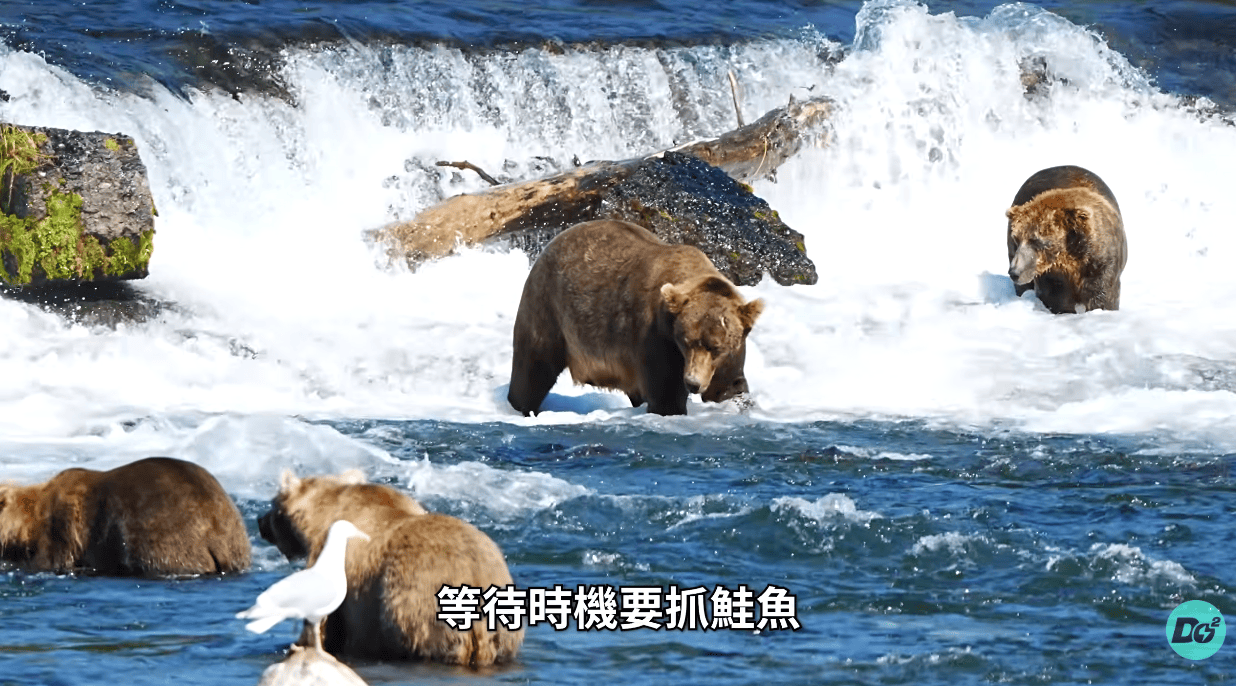
The positions on the falls are clearly defined: only the strongest adult male bears that win the fight can occupy the prime spot at the top of the falls, where the salmon are most concentrated; female bears and cubs can only be driven downstream to scavenge the leftovers. To store fat for winter, a brown bear can eat up to 34 kilograms of salmon a day—every September, the area even holds a "Fat Bear Week" to vote for the bear that gains the most weight each year.
These salmon, after living in the Pacific Ocean for two or three years, will instinctively and by smell migrate back to their birthplace, swimming upstream. After completing their reproductive mission, they die of exhaustion, and their bodies become nutrients, nourishing the next generation of salmon and the entire forest—a life cycle with no end in sight.
Eric eventually managed to get a viewing spot only 10 to 20 meters from the falls, and even less than 2 meters from the bears. Watching the salmon leap and the brown bears plunge and bite at the water up close, the sheer force of life left him speechless with astonishment.
How can I begin to experience a similar Alaskan trip?
Eric's route cannot be replicated exactly, especially the Katmai bear watching trip, which depends on weather and flight conditions. A more practical planning approach typically involves two parts:
- Five-day core experienceAreas like Anchorage, Glacier Hiking, and Whittier are relatively less affected by the weather.
- Seasonal additional experienceBear watching at Brooks Falls and glacier boating at Knik are subject to change depending on the month, weather, and availability.
If you'd like to plan your own Alaskan trip, our summer tours depart regularly from June to August each year. Just find a time that suits you and you're good to go!
Frequently Asked Questions (FAQ)
What month is best for bear watching in Alaska?
During the summer salmon run, it is common to see brown bears fishing at waterfalls, but whether a trip can actually be arranged depends on the weather and flight conditions that year. It is recommended to check with your travel planner to confirm the seasonal conditions before departure.
Will the bear watching event in Caterpillar be canceled due to weather?
Yes. Traveling to Katmai usually requires connecting by small plane and seaplane. Flights may be cancelled in case of bad weather, so it is recommended to allow for flexibility in your itinerary or have a backup plan.
Can I participate in glacier lagoon canoeing without any prior canoeing experience?
A professional guide will usually lead the group and explain the basic procedures and safety distances. It is recommended to confirm the actual difficulty and suitability with the trip planner in advance.
Is five days enough to experience Alaska?
Five days can cover the core itinerary including Anchorage, glacier hiking, seaplane base and Whittier; if you want to add bear watching in Katmai, it is recommended to allow more flexible days to cope with weather changes.
What should you wear in Alaska during the summer?
The temperature difference between day and night is significant, and it feels even colder when traveling near glaciers and rivers. It is recommended to wear layered clothing and prepare a waterproof jacket and shoes.