
For first-time travelers to the United States, the voltage is often one of the most important things to confirm before departure. Common concerns include: "Will my household appliances work?" "Will they burn out?" "Do I need to bring a transformer or adapter?" The United States uses 110–120V voltage, similar to Taiwan. As long as you keep the following points in mind, most electrical appliances can be used safely.
This article begins by comparing US voltage and sockets with those in Chinese-speaking Asian countries, and then guides you through the precautions for using electrical appliances in the US, the key points for choosing adapters and extension cords, making your trip to the US more worry-free and convenient.
Basic Information on US Voltage
- US voltage: 110–120V
- Frequency: 60Hz
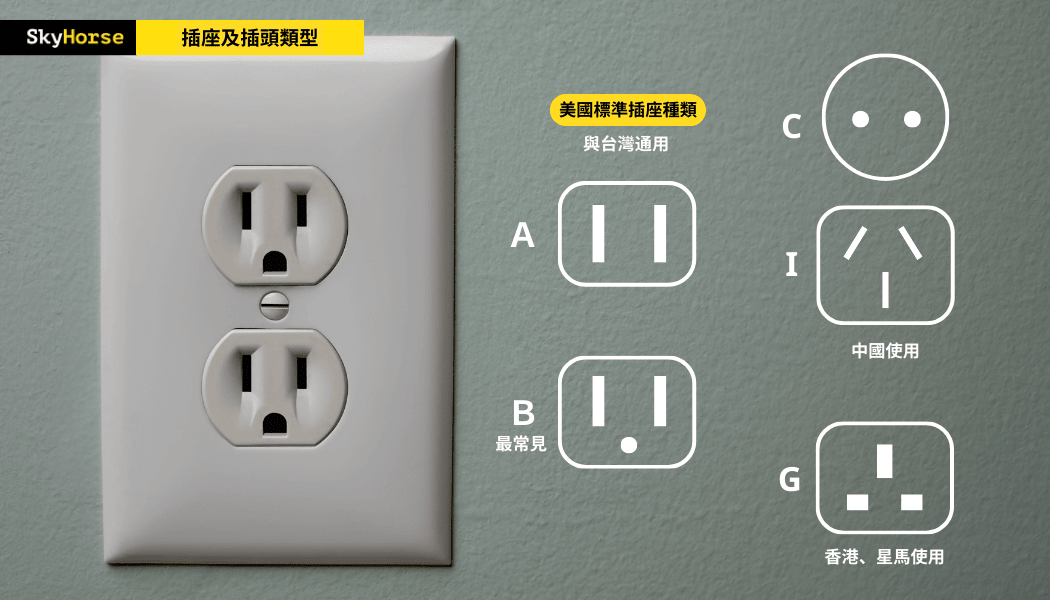
- Plug specifications: Type A/B (flat two-prong, or two-prong + grounding third prong)
Voltage Comparison between Major Chinese-Speaking Tourist Areas and the United States
| area | Voltage | frequency | Socket type | Are there any risks involved in bringing electrical appliances to the United States? |
| USA | 110–120V | 60Hz | Type A/B | — |
| Taiwan | 110V | 60Hz | Type A/B | Almost all can be used directly, some require an adapter. |
| Hongkong | 220–240V | 50Hz | G type | ⚠ Single-voltage appliances cannot be used directly with US sockets and require an adapter. |
| China | 220V | 50Hz | Type A / C / I | |
| Singapore | 230V | 50Hz | G type | |
| Malaysia | 230V | 50Hz | G type |
Important reminder:
Travelers from Taiwan will have the easiest time, as most electrical appliances can be used directly. However, if the plug is a three-prong plug, some American hotels or Airbnbs (especially older homes) may not have a Type B plug, so an adapter will be needed.
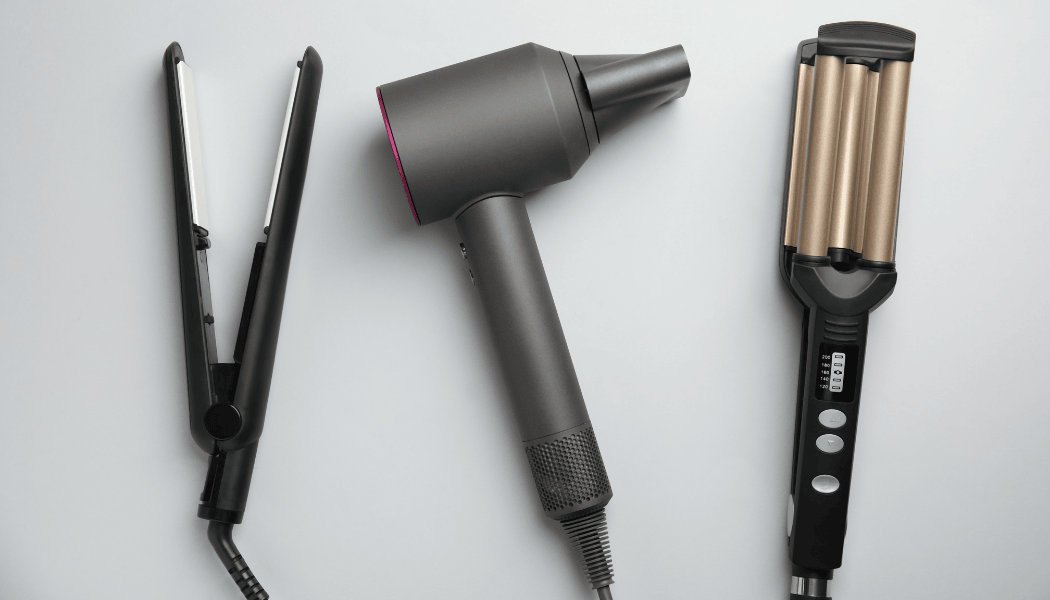
Travelers from Hong Kong, China, Singapore, and Malaysia should be especially careful not to plug single-voltage electrical appliances (such as hair dryers and curling irons) directly into American sockets, as this could easily cause electrical malfunctions.
Must-read for travelers to the US: How to determine if electrical appliances meet US voltage standards?
First, check if your electrical appliances are "global voltage" compatible.
The following information is usually printed on all electrical appliances (on transformers, plugs, or the bottom of the appliance):
INPUT: 100–240V, 50/60Hz
Seeing this set of numbers means:
- Universal voltage
- It can be used in the United States, Japan, Europe, and Southeast Asia.
- No transformer required
- Only a plug adapter is needed (if the plug pins are incompatible).
Generally speaking, international brand mobile phones, laptops, cameras, power banks, and electric toothbrushes all use global voltage.
2. If the label indicates only 110V or only 220–240V
Appliances labeled 110V are typically from Taiwan and can be used in the US. However, high-powered appliances like hair dryers and curling irons may overheat or trip due to current differences, potentially causing malfunctions or burnout. Travelers should also be aware that some appliances purchased in Japan are 100V, which may work fine in Taiwan but could overheat in the US. It's advisable to use them only briefly and monitor their condition closely.
If it is only labeled as 220-240V (mostly Hong Kong, China, Singapore, and Malaysia), it cannot be used directly in the United States, as it may cause overheating, failure to heat up, insufficient power, or direct damage to the appliance.
3. Can the socket type be inserted?
The United States commonly uses Type A/B sockets. Most electrical plugs in Taiwan can be used directly. Hong Kong, Singapore, and Malaysia use Type G plugs. Some electrical appliances in China use Type C/I plugs and require an adapter. However, it's important to remember that a plug-in socket does not guarantee voltage compatibility. Both must be confirmed for safe use of electrical appliances.
How to choose adapters and transformers?
An adapter changes the shape of the plug, allowing the appliance plug to be used locally, but it does not change the voltage.
Recommended choice:
- There is a grounding wire
- The socket is highly secure and does not loosen.
Some people prefer to choose universal adapters so they don't need to carry many different adapters when traveling to different places. This is a smart approach, but it's important to note that some universal adapters, in order to accommodate various plugs, may have loose plugs or unstable hinges. You should be careful when purchasing them.
Transformers are used to change voltage. However, most household appliances are now compatible with different voltages, and 3C products such as computers often have built-in transformers. As for high-wattage appliances that cannot be used locally, we "strongly recommend against" using transformers. These include heating appliances such as hair dryers, curling irons, straighteners, microwaves, kettles, and heaters. High-wattage loads can cause transformers to overheat instantly, resulting in noise and the risk of burning out, which is extremely unsafe. We suggest bringing a travel-specific hair dryer and electric spoon with built-in voltage adjustment functions, or using appliances provided by the hotel. Safety is paramount when traveling.
Can I use a multi-hole extension cable?
Many portable devices need to be charged these days, but what if you're worried about not having enough outlets or adapters in hotels or Airbnbs? Can you bring a multi-socket extension cord to charge all your devices at once?
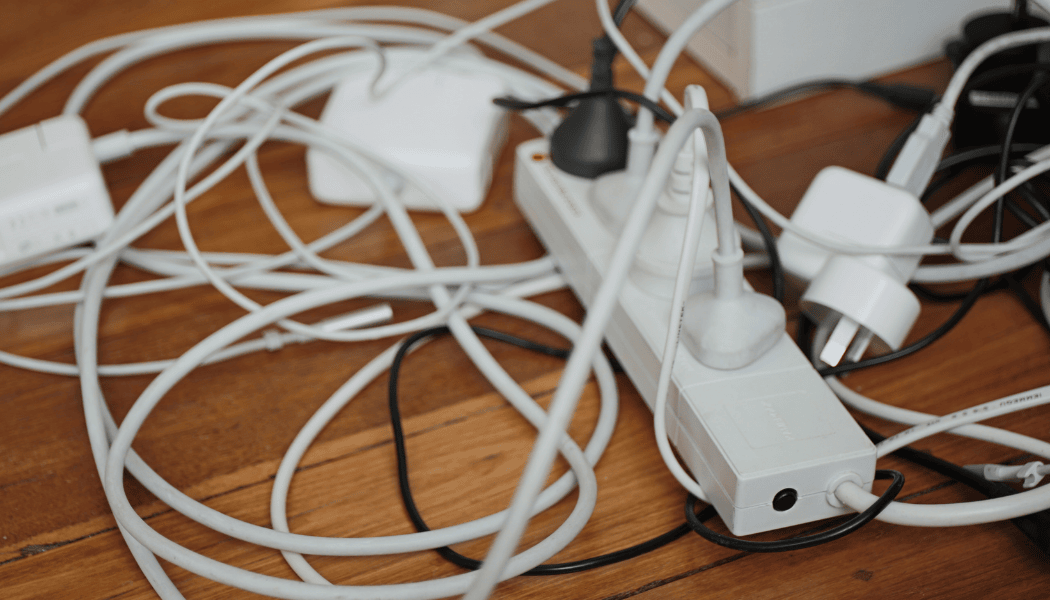
Using an extension cord to charge devices like phones, smartwatches, cameras, and computers is generally fine. However, using high-power appliances like hair dryers, curling irons, and kettles simultaneously on the same extension cord can overload the voltage and cause a power outage. Travelers should consider choosing extension cords with safety features that automatically disconnect when the power is overloaded. This is especially important in older buildings where unstable voltage can cause anything from minor power outages to major electrical fires. It's best to avoid using high-power appliances on the same extension cord at the same time.
Safe electricity use makes traveling in the US more worry-free.
The voltage in the US is similar to that in Taiwan, so most electronic devices can be used directly. The most important thing is to confirm that high-power appliances support 120V and have an adapter ready. Keeping these points in mind will eliminate any worries about plugging in the wrong power cord or damaging your equipment, making your trip much easier.
In addition, almost all rental cars in the US now have USB charging ports; you just need to bring your own adapter.Long road tripNo need to worry about your phone running out of battery! Except for special models, all Sky Horse vehicles are equipped with CarPlay, which not only provides charging functionality but also allows drivers to connect directly to the car's screen for navigation, music playback, and phone calls.
For any questions regarding renting a car and driving in the US, please feel free to contact us through our website.[Self-driving guide], or use LINE Contact us directly to learn more!
Extended Reading:Complete Guide to Renting a Car in the US

