

Travelers planning a trip to the American West may find themselves torn between two renowned destinations: Yosemite National Park and the Grand Canyon National Park. Both are world-class destinations, but their scenery, transportation options, and ideal trip durations differ significantly. Furthermore, starting in 2026, U.S. National Parks will adjust entrance fees for international visitors, affecting popular areas including Yosemite and the Grand Canyon. This could add a considerable financial burden for foreign travelers planning to explore multiple national parks.
Therefore, this article will share the new national park fee system in 2026, and then compare the two national parks step by step in terms of landscape features, transportation, accommodation options, suitable groups, and number of travel days, so that you can understand the impact of the new US national park system on travelers in 2026 and make the most suitable travel plan for yourself.
New fee policy for foreign visitors to U.S. National Parks in 2026
Effective January 1, 2026, the U.S. Department of the Interior and the National Park Service (NPS) will adjust ticket prices for 11 popular parks for non-U.S. residents (non-U.S. citizens or green card holders). Yosemite and the Grand Canyon are among the parks affected by the new fees. In addition to the original ticket price, visitors will need to pay an extra $100 per person ($).
Another option is to purchase an annual pass (America the Beautiful Pass). The fee for foreigners is $250 USD, but it is calculated per vehicle. So as long as there are three or more people in the vehicle (including three people), it is generally more cost-effective even if you are only visiting one national park.
The 11 national parks that will require additional fees in 2026 include:
- California |Yosemite Yosemite National Park (California)
- California | Sequoia and Kings Canyon National Parks (California)
- Arizona |grand canyon Grand Canyon National Park (Arizona)
- Wyoming | Yellowstone National Park (Idaho, Montana, Wyoming)
- Wyoming | Grand Teton National Park
- Zion National Park, Utah
- Bryce Canyon National Park, Utah
- Glacier National Park, Montana
- Rocky Mountain National Park, Colorado
- Acadia National Park, Maine
- Florida | Everglades National Park
Introduction to Yosemite National Park and Grand Canyon National Park
Yosemite National Park
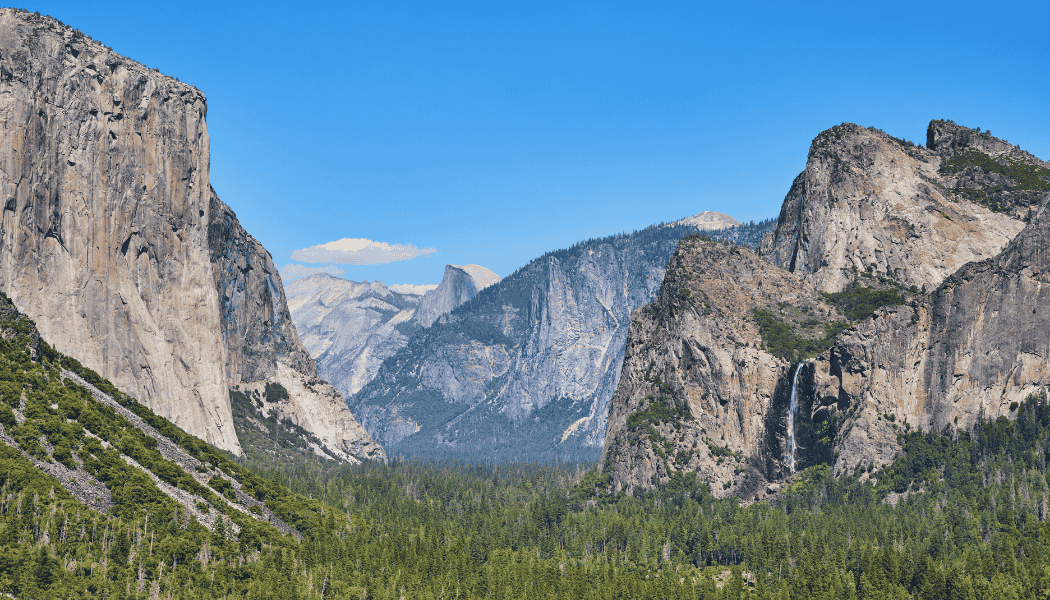
Yosemite National Park, located in the Sierra Nevada Mountains of California, is considered by many travelers to be "the most representative of American natural scenery." True to its name, its beautiful landscapes frequently appear in international publications and posters, making it a coveted travel destination for foreign tourists. The park is renowned for its magnificent granite formations, including world-famous monoliths such as El Capitan and Half Dome, complemented by seasonal mountain waterfalls, expansive valleys, and dense forests, creating a natural landscape that is both elegant and majestic.
Most visitors concentrate on the Yosemite Valley area, which boasts numerous trails and excellent shuttle systems, making it easy for families and seniors to plan walks or short hikes. With abundant waterfalls and lakes in spring, lush greenery in summer, vibrant autumn foliage, and snow-covered landscapes in winter, Yosemite is a national park with unique features in every season.
Extended Reading:Seven scenic spots around San Francisco
Grand Canyon National Park
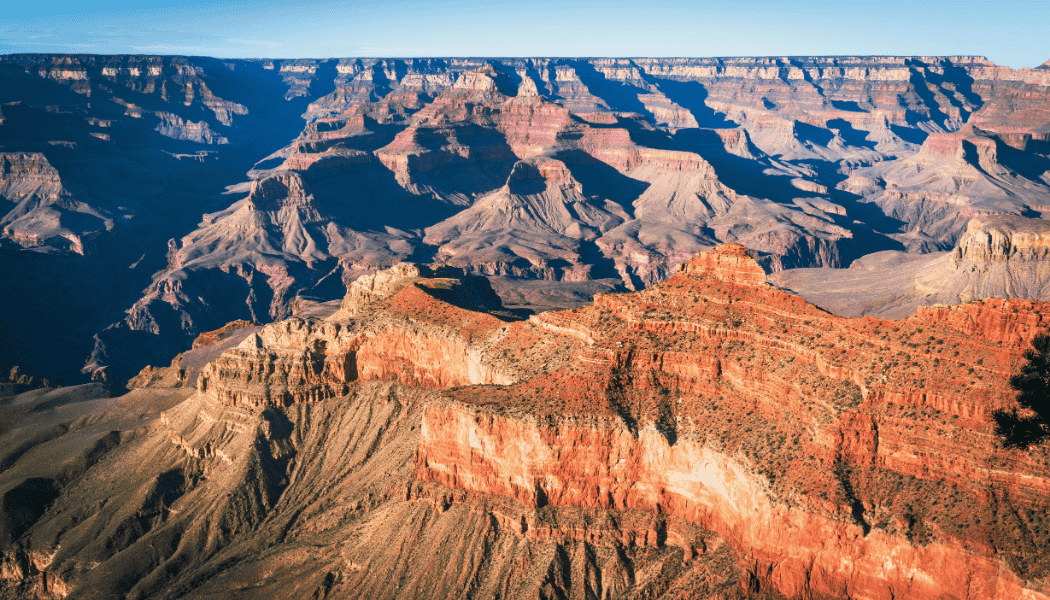
The Grand Canyon, located in Arizona, is awe-inspiring due to the massive geological formations sculpted by rivers over millions of years, showcasing the Earth's astonishing creativity. The South Rim is the most popular section, boasting numerous breathtaking viewpoints. From there, a short walk takes you to admire the canyon's deep, layered rock walls and expansive horizon. Unlike the pristine mountain scenery of Yosemite, the Grand Canyon evokes a sense of witnessing Earth's history—rugged, vast, and reminding us of humanity's insignificance. The Grand Canyon is divided into different sections, each far apart and inaccessible from the middle (separated by the canyon walls), so visitors typically choose to explore one side.
The South Rim of the Grand Canyon is open year-round and boasts comprehensive facilities, making it the preferred area for most travelers. The North Rim, due to its higher altitude, has roads closed in winter, making the South Rim the most convenient option for itinerary planning. Furthermore, most attractions on the South Rim are easily accessible, allowing for a complete experience even without extensive hiking. For hiking enthusiasts, there are trails that venture deeper into the canyon for a more immersive, nature-focused experience; however, these are typically intermediate to advanced hikes and not recommended for those without prior hiking experience.
Comparison of transportation methods and time between the two national parks
Most people travel to Yosemite and the Grand Canyon by car, but since they are very popular attractions, there are still some non-car transportation options. The convenience of these two options varies greatly, and the choice of transportation will directly affect the flexibility of the itinerary and the time required.
Transportation in Yosemite
- Renting a car: It takes about 4 to 5 hours to drive from San Francisco to Yosemite, and about 5.5 to 7 hours from Los Angeles. (This varies depending on the departure point and traffic conditions.) The roads in and around Yosemite are very well-developed, and the road conditions and traffic flow are smooth, making it easy to drive and not really necessary to rent a four-wheel drive vehicle.
- Public transportation: Yosemite's bus system YARTSThe Yosemite Area Regional Transportation System allows access to Yosemite from nearby towns or areas. Round-trip fares range from $1 TP4T4 to $1 TP4T44, depending on the distance. The final destination is Yosemite Valley, and passengers cannot get on or off along the way. Once inside the park, shuttle buses are available.
*If you are departing from San Francisco or Los Angeles, you will need to take a train to a nearby town first.
Extended Reading:Analysis of Car Rental Costs for a Self-Drive Trip in the American West
Transportation to the Grand Canyon
- Renting a car and driving yourself: Most people traveling to the Grand Canyon start from Los Angeles, and the journey to the South Rim takes about 7.5 to 8.5 hours. However, they generally don't go straight to the Grand Canyon; they might stop in Las Vegas and visit other famous attractions like Antelope Canyon and Horseshoe Bend. If you start from Phoenix, it only takes about 4 hours.
- Public Transportation: Aside from booking a one- or two-day tour from Las Vegas, there are almost no suitable public transportation options from Los Angeles. The best way is probably to take a train to Flagstaff first, then transfer to a bus to the Grand Canyon, a journey that takes at least ten hours. There are several free shuttle bus routes on the South Rim of the park, running approximately every 15-30 minutes. Schedules vary depending on the season; please refer to the National Park website.
Extended Reading:The ultimate road trip in the American West! Explore five of the world's most spectacular sights.
Yosemite vs. Grand Canyon, which one should you choose?
Both are incredibly attractive national parks, but for travelers, time, budget, and the physical condition of their travel companions are all factors to consider. If you could only choose one, which would you pick? Below, we'll highlight the differences between the two in terms of entry city, landscape type, transportation, physical fitness, and accommodation, allowing you to choose the dream destination that best suits your needs based on these key differences!
- Select based on departure city
If you're traveling from San Francisco or the Bay Area (Silicon Valley), Yosemite is more convenient. If you're traveling from Los Angeles, either destination is worth considering. If you're traveling from Phoenix or Las Vegas, the Grand Canyon is a better option.
- Seasonal differences
Spring (March–May)
Yosemite Falls is at its most spectacular and has a comfortable climate, making it one of the most beautiful times of the year.
The Grand Canyon has a cool climate, making it ideal for hiking.
Summer (June–August)
Yosemite is in its peak season, lush with greenery and teeming with wildlife. However, traffic and parking can be challenging, the low altitude means it can still be very sunny without shade, and seasonal lakes and waterfalls may enter their dry season.
The South Rim of the Grand Canyon is hot, making hiking quite strenuous, but activities at the viewpoints are still comfortable.
Autumn (September–November)
Yosemite boasts stunning fall colors and is less crowded, making it ideal for hiking.
Autumn temperatures are ideal for visiting the Grand Canyon's South Rim, making it the best time to travel there.
Winter (December–February)
Some roads in Yosemite are closed, but you can still see the snow scenery, which has a unique charm.
The South Rim of the Grand Canyon remains open as usual in winter, with fewer tourists and little difference in scenery, making it a great season for taking photos.
- Based on the choices of the travel members
- For families, seniors, and travelers who have difficulty walking: The Grand Canyon is more suitable. If you are driving, most viewpoints are within a five-minute walk, so you can see the spectacular scenery without hiking.
- Young people, those who enjoy long outdoor activities, and hikers: Yosemite has many accessible trails as well as a variety of intermediate and advanced hiking options. If you love nature and want to immerse yourself in it, Yosemite is a more suitable choice.
- Choose according to accommodation
- Hotels within Yosemite National Park are extremely difficult to book, with high prices and basic amenities; reservations need to be made at least six months in advance during peak season. Accommodation options in nearby towns are scattered, and driving into the park takes 40-90 minutes. Accommodation choices are relatively limited.
- While the cabins inside the Grand Canyon South Rim are popular, booking pressure is lower due to the abundance of hotels and accommodations outside the park. Even staying in the town of Tusayan outside the park is only a 15-minute drive away.
- Choose according to scenery preference
- Yosemite: American-style valleys, temperate forests, waterfalls, and different scenery in each season, making it a destination that you can visit again and again, to experience the mountains and forests, and to see different scenery each time.
- The Grand Canyon: with its breathtaking and magnificent canyon scenery and unique landscape, it is a sight worth experiencing once in a lifetime. Being in the canyon in person is a completely different feeling from looking at photos.
- Choose based on the number of travel days (self-driving)
If you only have two or three days to spare and want to quickly experience American road trips and national parks from Northern California, then Yosemite would be a better choice. The journey to the Grand Canyon is too long, and although you don't need to spend too much time hiking inside the park, it would be a shame not to see other nearby attractions along the way.
If you're traveling from Los Angeles, a trip to the Grand Canyon requires at least three days, but three days is extremely tiring and involves long drives. A five-day trip is recommended for a more compact yet spectacular experience. However, if you're traveling from Phoenix or Las Vegas, even two days is sufficient to witness the Grand Canyon's magnificent scenery.
Extended Reading:Suggested itinerary for the Grand Canyon and surrounding attractions (for those who prefer a relaxed pace)
How can I plan my trip to both national parks?
If you rarely get the chance to travel to the American West and are worried about when you'll be able to visit the US again, is it possible to visit two world-class attractions in one trip? Although the United States is vast and travel time between attractions is long, if you have enough days on your trip and don't mind long road trips, it is still possible to fulfill your wish to visit two national parks in one trip.
The entire trip will take at least 7-10 days.
You could consider starting from San Francisco, then going to Yosemite (2 days), south to Las Vegas (1 day), and then driving to the Grand Canyon and Antelope Canyon (3-5 days). If you have enough time, you could do this...Highway 1Return to San Francisco from Los Angeles (3-5 days).
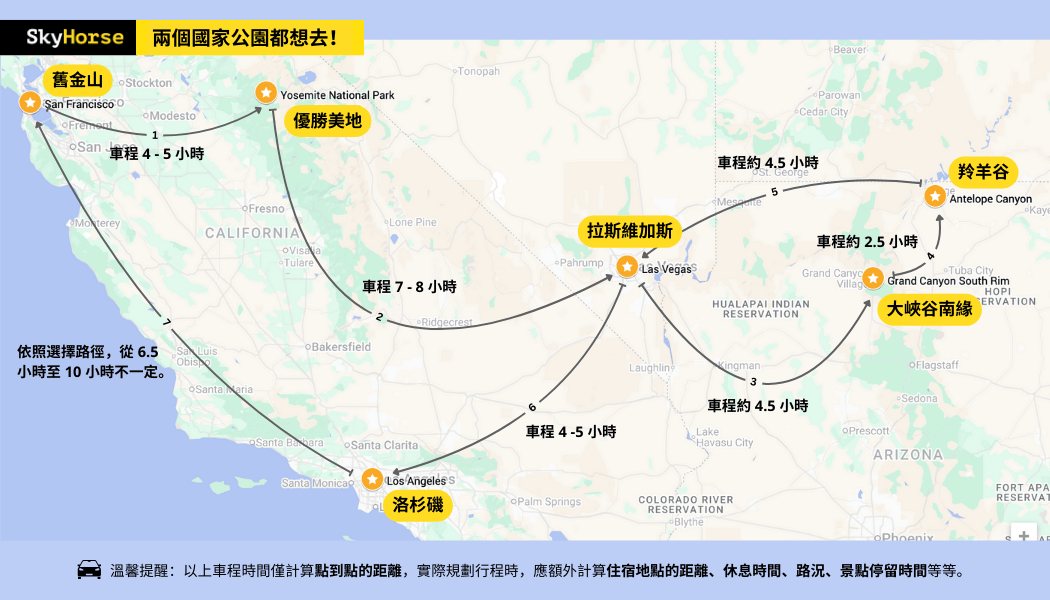
Considering different entry and exit points, and A renting and B returning.
If you don't want to drive for too long, there are now direct flights to Taiwan from San Francisco, Los Angeles, and Phoenix. You can consider entering and exiting from different points, only needing to travel between the two cities, and enjoying the scenery along the way. Sky Horse also has locations in these cities, so feel free to contact us if you want to rent or return a car in different areas!
Extended Reading:A must-read for long-distance road trips in the US! Addressing five major concerns: rest stops, navigation, safety, unexpected situations, and refueling.
Purchase a national park annual pass
If you decide to visit two national parks, it's more cost-effective for an individual to purchase the increased annual national park pass (US$1 TP 4 T $250) than to pay per park individually or per person. National park entrance fees are typically US$30-40 per vehicle (US$1 TP 4 T $30). If a foreign tourist is traveling alone, they will need to pay an additional US$100 per US$1 TP 4 T $100. Therefore, if two people are traveling together, the cost for one national park would be around US$230 per US$1 TP 4 T $230. Visiting only two national parks will be significantly more economical.
Yosemite and the Grand Canyon are both beautiful landscapes worth savoring.
It's hard to imagine anyone who has visited either of these places having a negative opinion of them, and it's difficult to compare which one is better or more beautiful. Whether it's Yosemite's high mountains, canyons, waterfalls, and forests, or the Grand Canyon's breathtaking terrain and deep landscape, both national parks have the appeal to represent the natural scenery of the American West, which is why they are listed among the most popular U.S. national parks.
However, with the new national park fee system in 2026, we need to make the best choices for ourselves in terms of time, transportation, and budget. Hopefully, this analysis and introduction to the two national parks will make it easier for you to decide which national park to visit, or what preparations to make if you want to visit both.
Most importantly, regardless of which national park you choose, it is recommended to plan ahead.Reserve a CarConfirm accommodations and allow flexibility for travel time and weather changes. As long as you grasp the key points in the article, and as we...Self-drive TipsWith the wealth of useful information provided and the option of Sky Horse's all-Chinese service, even those unfamiliar with the United States or unsure of their English will be able to plan a smooth, safe, and memorable trip to the national parks of the American West.

