

When traveling in the United States, renting a car and driving yourself is one of the most convenient and flexible options. In addition, American roads are generally wider and straighter, and the left-hand drive system is the same as in Taiwan. Many common road signs are also very similar. As long as you understand the traffic rules and cultural differences in driving in the United States, you can also embark on a safe driving journey on a wonderful road trip!
This article outlines five key aspects and 20 important points, covering basic driving rules and cultural differences, traffic light and common road sign identification, highway driving tips, special traffic situations and rules, and parking regulations. After reading this article, you will feel more at ease and confident about renting a car and driving in the United States.
US Traffic Rules Part 1: Basic Driving Rules and Cultural Differences
- Speed UnitThe United States uses the mile system, with 1 mile approximately equal to 1.6 kilometers. If a speed limit sign says 65 mph, that's roughly equivalent to 104 kilometers per hour. If traffic is flowing smoothly, please drive within the speed limit; do not drive too fast or too slow.
- Pedestrian PriorityU.S. law protects pedestrian rights, granting pedestrians absolute priority at crosswalks and intersections. Even when traffic is flowing smoothly, vehicles must come to a complete stop and wait for pedestrians to cross before proceeding. Violation of this rule can result in hefty fines. Accidentally colliding with a pedestrian can lead to substantial legal costs, so it's best to yield even if pedestrians cross the road illegally.
- bike pathIn many major American cities, bike lanes are becoming increasingly common. Drivers are not allowed to occupy or park in bike lanes. Most of the time, drivers can only move into the right-hand bike lane when turning, and must be extra careful of approaching bicycles, electric scooters, etc.
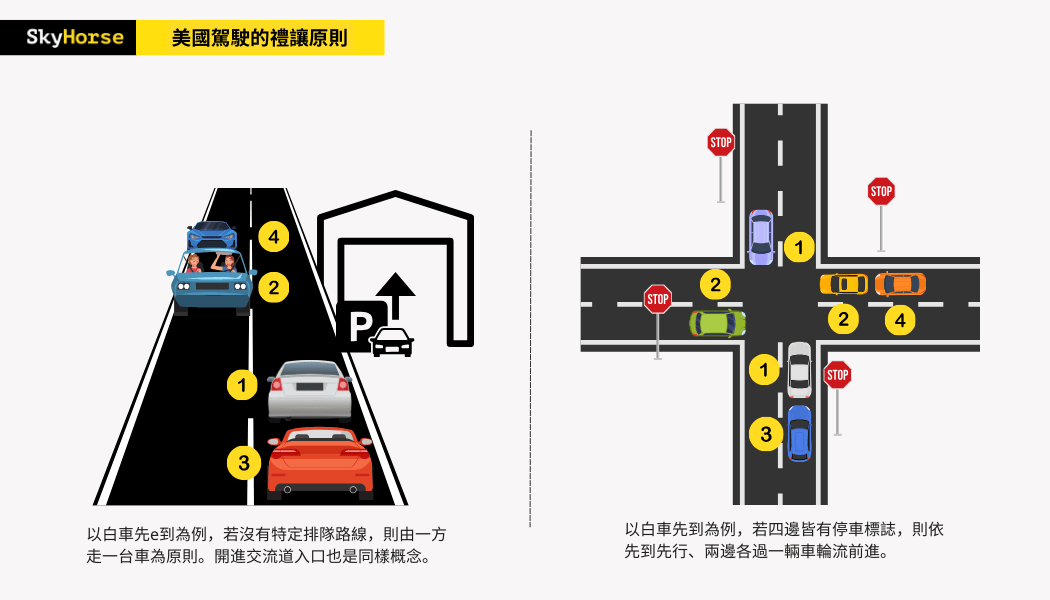
- Principle of courtesyIn the absence of traffic signals, such as when entering a parking lot from two directions simultaneously or turning, the usual procedure is..."turn"or"First come, first served"As a general rule, never accelerate ahead of the car in front of you. American driving habits are generally law-abiding; yielding when necessary will make driving smoother and avoid angering other drivers.
US Traffic Rules Part 2: Identifying Traffic Lights and Common Road Signs
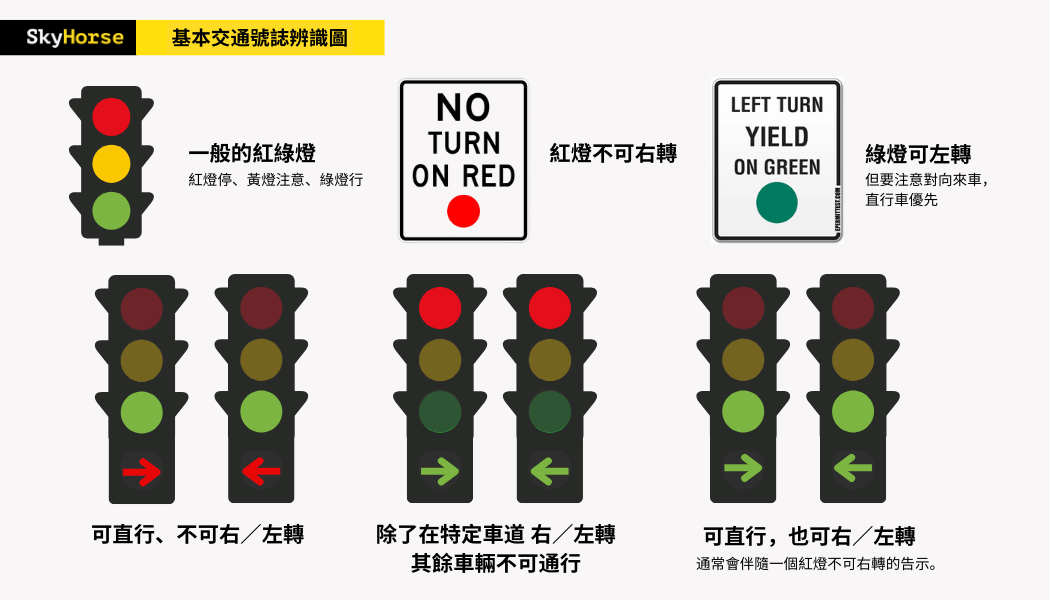
- Red light, turn right.Like most traffic lights in the world, green means go, yellow means warn, and red means stop. However, in most parts of the United States, you can turn right on a red light, provided you come to a complete stop and are sure it is safe to do so. But if you see a "No Turn on Red" sign, turning right on a red light is prohibited.
- Left and right turn signalsSome intersections have very detailed traffic signals, with separate lights for left turns, straight ahead, and right turns. You must follow these signals. If an arrow light is illuminated, you can only proceed in that direction. Some intersections will display a "Left Turn Yield on Green" sign (you can only proceed when the left turn light is green). These roads usually have a dedicated left turn lane, so remember to switch lanes in advance.
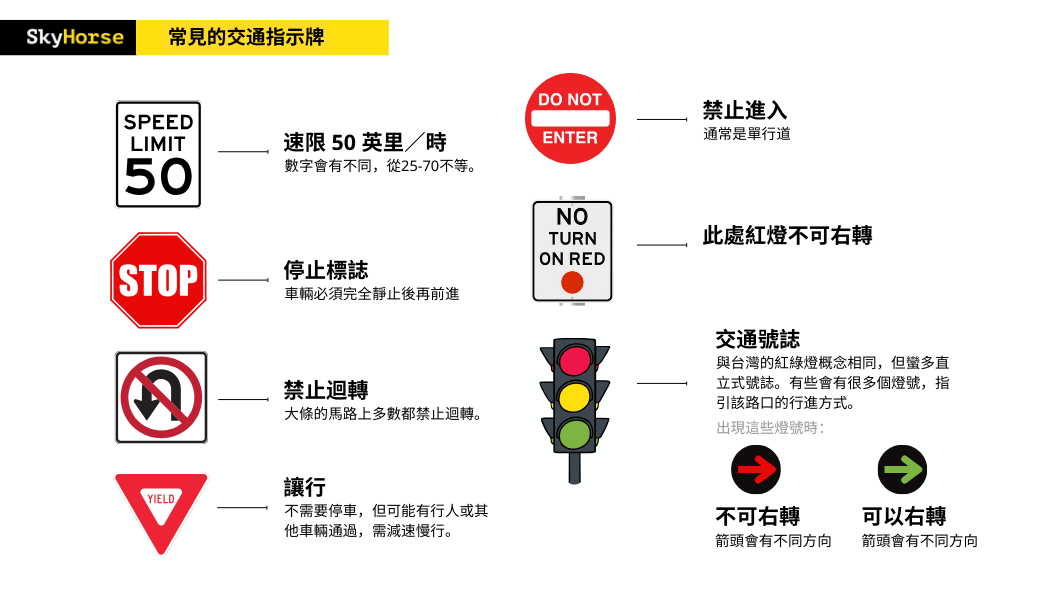
- Stop SignCommonly found in residential areas or small intersections. The rule is "completely stationary → confirm safety → proceed in order of arrival." If arriving almost simultaneously, vehicles on the right have priority. Some intersections only have stop signs in one direction, in which case vehicles on the main road without stop signs must proceed first; if there are stop signs in all four directions, the principle of first-come, first-served and the aforementioned rotation principle applies, with one vehicle going north-south at a time and one vehicle going east-west at a time.
Since there are no stop signs in Taiwan, it is especially important to note that if multiple cars stop at a stop sign at the same time, and you are the third car, you must still stop when you reach the intersection. You cannot follow the car in front of you and cross the road directly.
- Yield signThis means that drivers must slow down and observe when passing through this area. If there are vehicles or pedestrians with the right of way, they must give way. Only when there are no oncoming vehicles can they proceed directly.
- Speed limit signIn the United States, speed limits are generally clearly marked on roads. Depending on the road type, speed limits typically range from 25 to 70 mph. Please always drive within these speed limits. Many navigation apps now also remind drivers of the speed limits for that section of road. Drivers should refer to road signs as a guide, as there may be other conditions in the area that have not yet been updated in the navigation system.
For more related traffic signals, please refer to [link/reference].California Department of Motor Vehicles(Similar to the vehicle inspection agency in Taiwan)
U.S. Traffic Rule 3: Highway Driving Instructions
The U.S. interstate highway system is vast and complex, requiring special attention to relevant regulations and speed limits, as well as a focus on navigation and road conditions.
- Driveway UseThe left lane is the overtaking lane. After overtaking, you should return to the right and avoid overtaking from the right. If driving at a slow speed, you should try to avoid driving in the inner lane.
HOV/Carpool lanes are for use by two or more people traveling together; Toll lanes require payment; Express lanes have time restrictions and fees, so it is recommended to avoid them if you are unfamiliar with them.
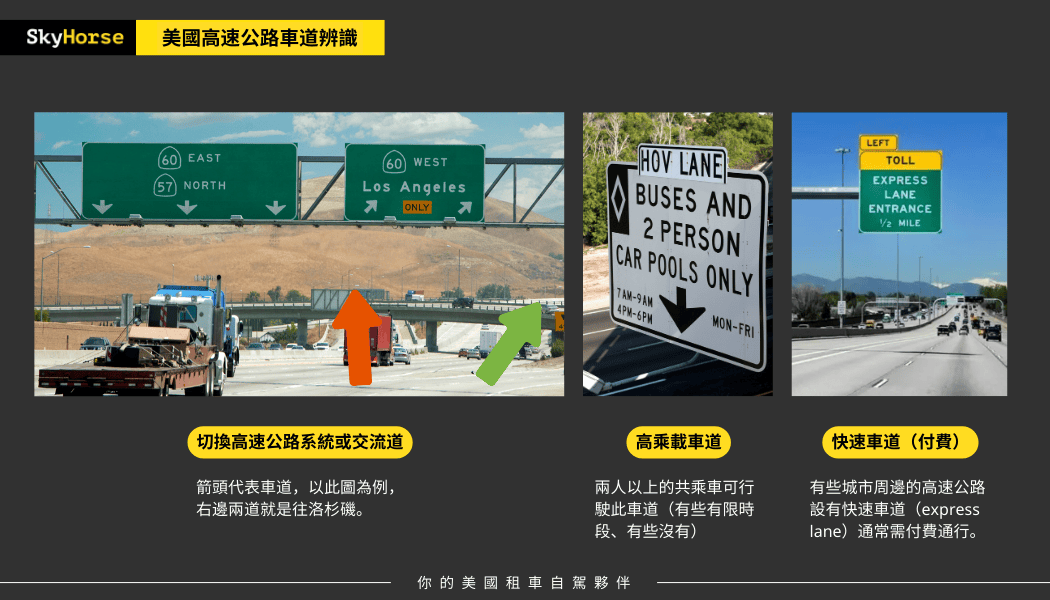
- AC NavigationExit numbers are clearly marked and will be indicated at mile 1 and mile 0.5. Exits may be on the left, middle, or right; drivers should prepare to change lanes in advance.
- safe driving distanceMaintain a distance of at least 3 seconds, and extend this to 4–5 seconds at high speeds or in rainy weather.
- Speed limits and law enforcementSpeed limits are mostly between 55 and 70 mph. Although speed cameras are not very widespread, police often hide on the roadside to enforce the law, and speeding fines are very high, accumulating based on the speed exceeded, sometimes reaching thousands of dollars.
U.S. Traffic Rules Part 4: Special Traffic Situations and Rules
- School bus stopWhen a school bus stops and displays a "STOP" sign, it means that a student needs to cross. Unless there is a physical divider between the two lanes, all vehicles in both directions must stop and wait.

- Emergency vehicles give wayUpon hearing the sirens of police cars, fire trucks, or ambulances, you must immediately and safely pull over to the right, slow down, and stop to give way to these vehicles on duty. It is particularly important to note that even in the oncoming lane, you should pull over to give way, as these vehicles may cross the center line and travel in the opposite direction, unless there is a physical median separating the two sides, in which case you do not need to stop.
- Stopped by the police (random inspection or with a police car following behind).Immediately signal with your turn signal and pull over to the side of the road when it is safe to do so. Turn off the engine and place both hands on the steering wheel. Wait for the police to approach and give you instructions before taking out your documents. Do not get out of the vehicle or rush to search for your belongings!
- Drunk driving regulationsIn most states, the upper limit for blood alcohol concentration (BAC) is 0.081 TP3T. However, for travelers, the risk of driving is extremely high regardless of the amount of alcohol consumed. The principle of "don't drink and drive" should be upheld.
- Cell Phone UsageMany states prohibit holding a cell phone while driving; use a hands-free device to make calls. Watching videos or sending messages on a cell phone is almost universally banned.
- Headlight regulationsSome states require drivers to turn on their headlights whenever their windshield wipers are on to ensure visibility. On some roads, especially in national parks, signs may indicate that drivers must turn on their headlights due to dense fog or poor visibility. If you are unsure and may violate the rule, you can refer to the headlights of other drivers or drive with your lights on at all times.
US Traffic Rule Five: Parking Regulations
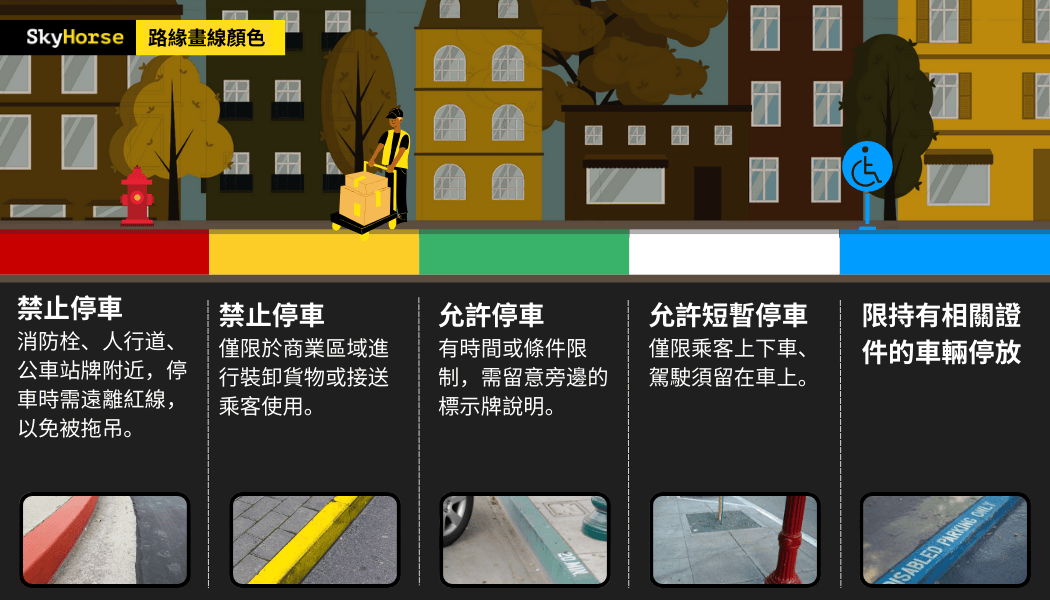
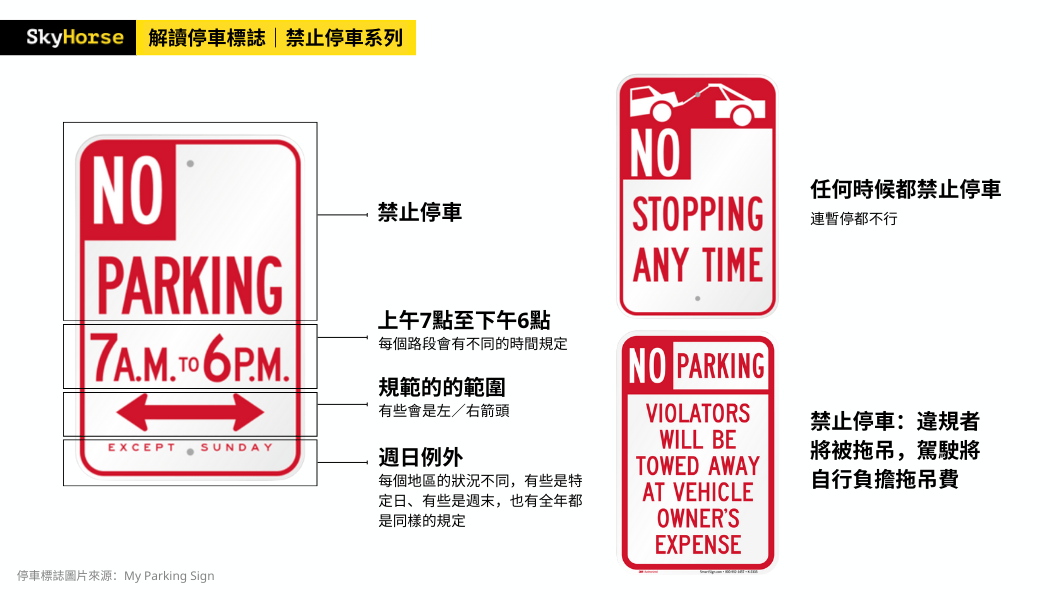
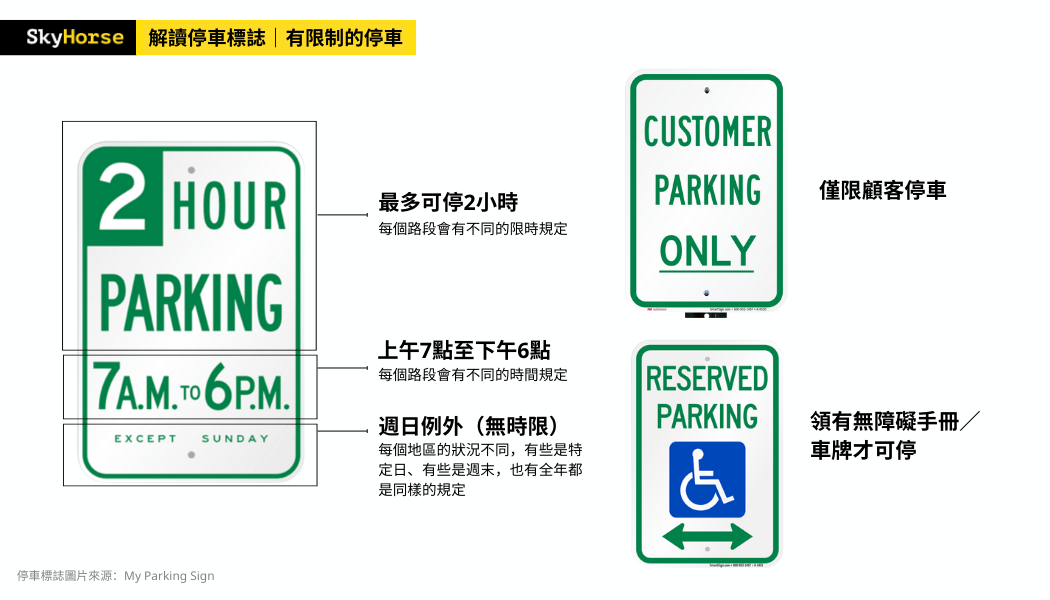
- Park according to signs and regulationsUnlike Taiwan, where street parking is marked with grids, in the United States, regulations are usually indicated by signs or curb colors. Different restrictions may apply to the same section of road, so be sure to carefully read the signs and arrows before parking.
Meaning of common curb colors:
- Red line: No parking. Commonly found at fire hydrants, bus stops, and other locations.
- Yellow line: For loading/unloading or short-term parking only; long-term parking is not permitted.
- Green line: Parking is allowed, but there are time restrictions; please check the signs.
- White line: Brief passenger pick-up and drop-off; driver must remain in the vehicle.
- Blue line: Designated for vehicles with accessibility certificates.
Parking Precautions:
- Parking is permitted but not free. You need to check the roadside payment chart or payment machine for the regulations. Failure to pay on your own may result in a fine or towing.
- Many areas have time restrictions, so be sure to read the signs carefully.
- Accessible parking spaces must not be occupied; violators will be fined over $250.
- A distance of approximately 4.5 meters must be maintained in front of fire hydrants.
- Residential areas may require a "parking permit," and illegally parked vehicles will be towed away.
- Parking is prohibited during specific cleaning times, such as Tuesday mornings from 8 to 10 a.m.
- Stopping is prohibited at bus stops and taxi pick-up/drop-off areas.
For detailed parking rules and payment methods, please refer to:Complete Guide to Parking in the US
Follow U.S. traffic rules and enjoy a safe and worry-free road trip!
I want to rent a car and travel in the United States. I'm learning about...Car rental process,Rental Car InsuranceWhen you're on the road, the most important thing is to obey American traffic rules. Don't speed or take chances. After all, when traveling abroad, the most important thing is to return home safely and happily!
In addition, the following four mindset principles serve as a reminder to drivers renting cars in the United States:
- Plan your route in advance: Set your navigation settings clearly and have a general idea of the route beforehand to avoid relying too much on navigation and causing danger by suddenly changing lanes.
- Understand and abide by the rules: Violating traffic rules, speed limits, and parking rules can result in hefty fines.
- Be courteous and respectful: American drivers generally respect traffic rules, and there are unspoken rules mentioned earlier. Although not "mandatory," respecting local driving etiquette reflects a person's character. If someone yields to you, you can simply nod or greet them.
- Avoid driving while fatigued: For long-distance travel, it is recommended to consider your physical strength, plan regular rest periods, or join other travelers.Additional drivingTake turns driving and stay focused.
With proper preparation, adherence to traffic rules, and respect for American driving culture, you can easily enjoy the convenience and fun of renting a car and driving in the US. Whether it's the stunning scenery...California Highway 1,fromLos Angeles to Las VegasWant to embark on a desert adventure?Beautiful attractions around San FranciscoAll of these can become unforgettable memories of your journey.

